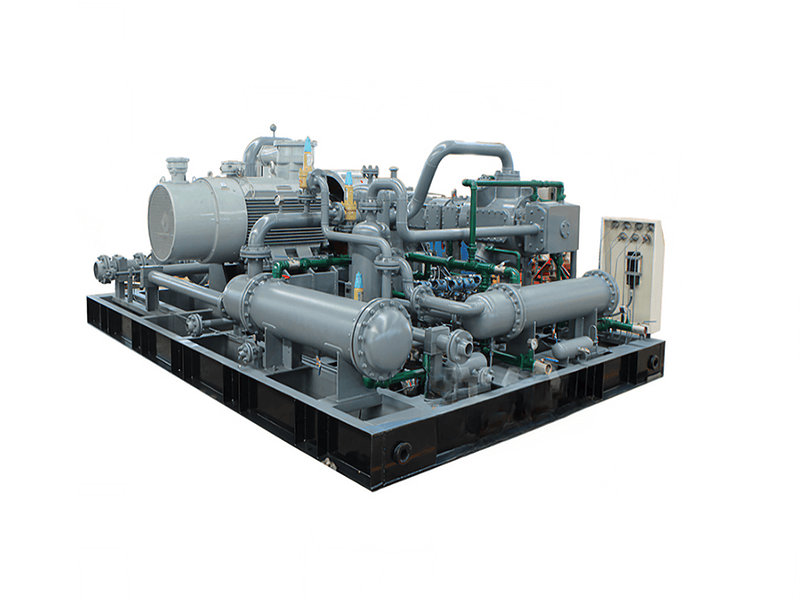
Beyond PSI: The Hidden ROI of a High Pressure Air Compressor
You’ve felt it before. That sinking feeling when a critical production line slows to a crawl because your compressed air supplies just can’t keep up with demand. Or worse, the safety hazard of a pressure drop mid-operation.
If you are a Plant Manager or a Maintenance Engineer in oil, gas, or manufacturing, you don't just need air. You need reliability under extreme duress. You need a system that turns on, stays on, and doesn't flinch when the gauge hits the red line.
Here is the truth most vendors won't tell you: Not all "high pressure" is created equal.
Why "Standard" Industrial Air Compressors Fail You
In high-stakes environments—whether you're feeding a CNG filling station or powering pneumatic controls in a chemical plant—air is a utility, not an accessory. When you rely on standard compressors built for light workshop duty, you introduce three critical risks:
-
Pressure Starvation: Tools and processes at the end of the line don't get the force they need.
-
Contamination Events: Standard lubricants and seals break down under sustained high PSI.
-
Downtime Dominoes: One compressor failure halts the entire downstream operation.
To truly optimize your operation, you need to look past the horsepower rating and look at the architecture of the machine.
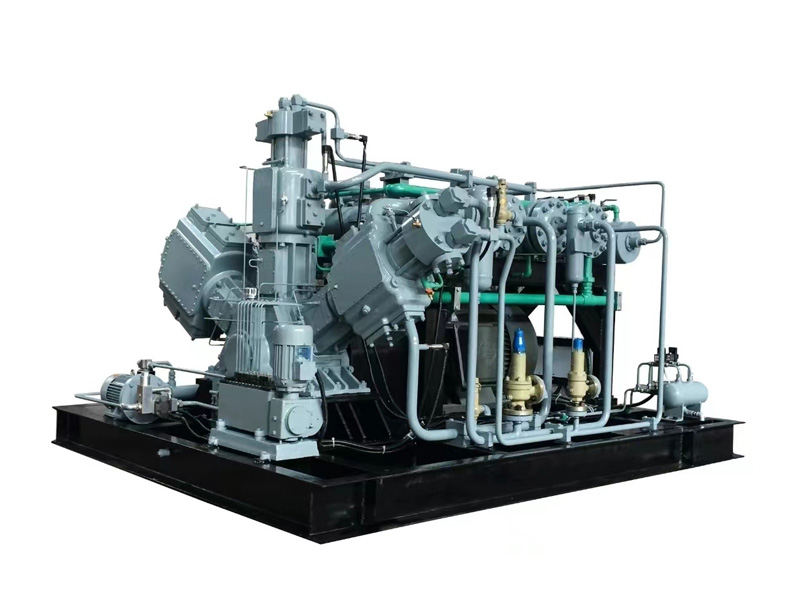
The "Meat": The Counter-Intuitive Truth About Air Storage
Here is where most engineering teams get it wrong: they think the compressor does all the work. In reality, for applications like pipeline purging or sandblasting in a mine, the receiver tank is the real workhorse.
The Advanced Framework: The "Buffer Zone" Principle
If you are constantly cycling your compressor on and off to meet peak demand, you aren't wearing out the motor—you’re killing the cooling system. Every start-up creates thermal stress.
Instead of simply buying a larger motor, savvy buyers invest in a high-pressure accumulator system paired with a variable speed drive. This allows your compressor to run steadily in the background while the tank handles the brutal surges. This single shift in design philosophy can extend the life of your valves and rings by 40%.
Matching the Machine to the Mission
Whether you are sourcing for a massive refinery or a specialized biogas project, your compressed air supplies must be purpose-built. Here is how to break down the selection based on your audience:
1. For Core Energy & Chemical Users (Oil, Gas, CNG)
You live in the "Danger Zone" of pressure. You aren't just moving air; you're often dealing with sour gas or volatile compounds.
-
Must-Have: Look for staged compression with inter-stage cooling.
-
Why: It prevents condensation build-up inside the cylinder, which can cause hydraulic locking and catastrophic failure in natural gas processing.
2. For Industrial Manufacturing (Automotive, Machinery)
Your demand fluctuates wildly. One minute you’re running a high-torque impact wrench; the next, you’re powering a precise robotic actuator.
-
Must-Have: Integrated intelligence. The compressor should talk to your plant's PLC.
-
Why: To optimize energy consumption during idle periods. A modern industrial air compressor should pay for itself in energy savings within 18-24 months.
3. For Specialized & Infrastructure (Food/Bev, Hospitals, Green Hydrogen)
Cleanliness and material compatibility are your obsession.
-
Must-Have: 100% Oil-Free technology and specialized coatings on the rotors.
-
Why: Even a microscopic amount of carry-over can contaminate a batch of beer or compromise a medical device sterilization cycle.
Don't Overlook the "Forgotten Four"
When you audit your next installation, pay attention to these four components. They are the silent killers of efficiency:
-
Intake Filters: In a dusty mine or construction site, a clogged filter creates a vacuum that the compressor fights against. Change them proactively.
-
Condensate Drains: If they stick open, you lose all your pressure. If they stick closed, you waterlog your tools.
-
Cooler Core: A dirty cooler in a power plant setting reduces volumetric efficiency by up to 15%.
-
Couplings: The mechanical link between the motor and the airend. If it’s not aligned perfectly, you're vibrating money into thin air.
The Bottom Line
You aren't just buying a machine; you are buying process assurance. Whether you are filling cylinders for a dive team or feeding a massive assembly line, the reliability of your high-pressure system dictates the profitability of your quarter.
Don't settle for a "one-size-fits-all" solution that forces your operation to adapt to the machine. Find a system that adapts to you.
Ready to spec a system that handles the heat and the pressure?
Visit AZS Compressor to explore heavy-duty configurations built for the demands of oil, gas, and industrial manufacturing.
Which part of your operation suffers the most from pressure drops? Let us know in the comments below—we love tackling the tough engineering challenges.