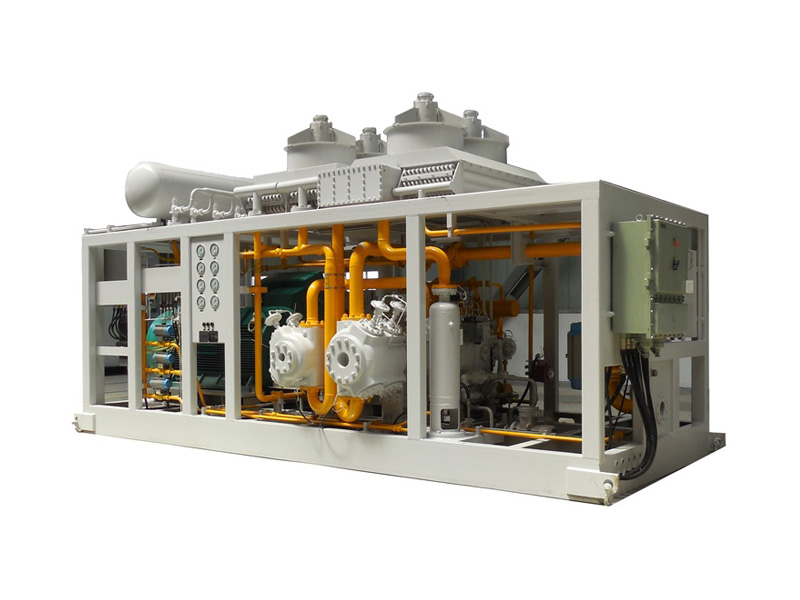
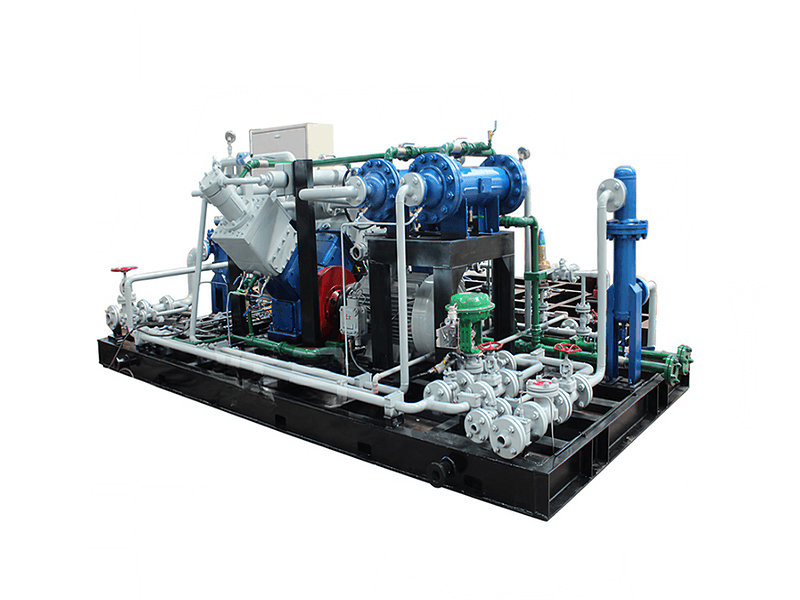
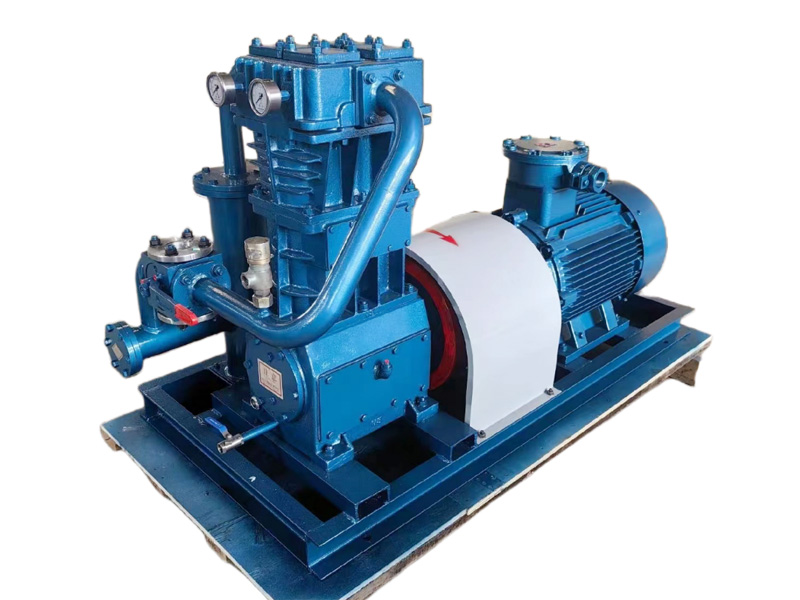
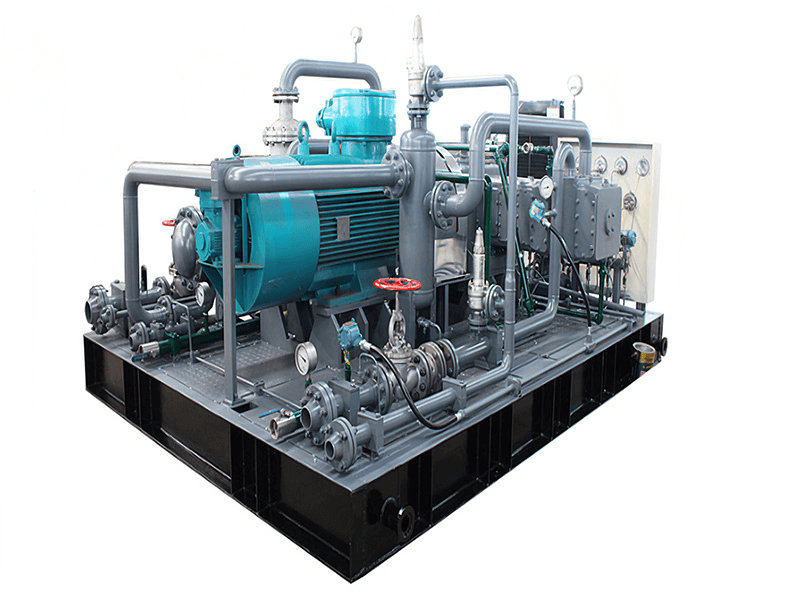
Since its inception in the nineteenth century, ammonia refrigeration technology has traversed nearly one hundred and fifty years of development. Starting from its initial service in the Munich breweries for cooling requirements, the ammonia compressor established a deep technological foundation in traditional sectors such as food freezing, chemical and pharmaceutical manufacturing, and construction engineering. Today, however, the ammonia compressor has long transcended its singular role as a "refrigeration device," and its application boundaries are extending substantially into the energy domain. Driven by the carbon peaking and carbon neutrality goals, ammonia, as a natural refrigerant with zero ozone depletion potential and zero global warming potential, is entering a strategic window of renewed technological development.
In traditional application areas, ammonia refrigeration systems maintain a solid and stable "stronghold." Food freezing and cold storage represent the most classic scenarios, encompassing frozen processing, frozen storage, fresh-keeping storage, ice cream production, and large-scale ice making, where ammonia compressors provide a stable and reliable cold source for these processes. The chemical and pharmaceutical industries similarly rely on ammonia refrigeration, whether for the removal of reaction heat during raw material production or for precise temperature control in drug preparation—both are inseparable from the continuous operation of ammonia compressors. In the field of construction engineering, prior to concrete placement in dam construction, it is necessary to reduce the temperature of aggregates through cooling water or ice-making methods to prevent hydration heat from inducing structural cracking, and ammonia refrigeration systems undertake an indispensable temperature control task here. The production of beer and beverages marks the historical starting point of ammonia refrigeration, continuing since 1876, and this traditional application still radiates enduring vitality.

Emerging application fields are opening up a "second growth curve" for ammonia compressors. In the green hydrogen–green ammonia industrial chain, the ammonia compressor serves as the core key equipment in synthetic ammonia plants, undertaking the critical task of compressing hydrogen and nitrogen to the synthesis pressure. The rapid advancement of wind and solar power-based hydrogen production and ammonia synthesis projects has driven sustained growth in market demand for ammonia compressors. Ammonia-based energy storage, as a forward-looking technology, utilizes surplus electricity from the grid that cannot otherwise be absorbed—employing it for water electrolysis to produce hydrogen, which is then synthesized into liquid ammonia for storage. Liquid ammonia has a volumetric energy density up to six times that of lithium‑ion batteries, offering a viable pathway for long‑term, large‑scale energy storage. The hydrogen‑ammonia integrated transport and storage concept has also attracted widespread attention: converting green hydrogen into liquid ammonia for transportation reduces storage and transport costs by approximately sixty percent compared to liquid hydrogen transport, effectively addressing the economic challenges of long‑distance hydrogen transmission. The marine power sector is likewise demonstrating new growth momentum, as the market space for ammonia‑fuel marine compressors expands rapidly in response to tightening international shipping emission regulations.
Technological breakthroughs have laid a solid foundation for the diversified application of ammonia compressors. In terms of materials, the application of duplex stainless steel impellers and ceramic coating technology has extended the service life of critical components by threefold, significantly enhancing equipment reliability under high‑temperature, high‑pressure, and corrosive operating conditions. Sealing technology has achieved a combined solution of magnetic fluid seals and dry gas seals, capable of controlling leakage rates below 0.5%, thereby meeting stringent safety and environmental requirements. In the field of intelligent control, digital twin systems have been introduced—through real‑time mapping and simulation analysis of operational data—achieving notable results of 95% fault prediction accuracy and 8% system energy consumption optimization. The environmental advantage remains the core value of ammonia as a refrigerant, with zero ozone depletion potential and zero global warming potential, rendering it irreplaceable in the ongoing phase‑out of fluorocarbon refrigerants. The trend toward miniaturization and skid‑mounted packaging also merits attention; fully enclosed (hermetic) ammonia compressors have been successfully developed, effectively reducing machine room footprint and refrigerant leakage risks.
The ammonia compressor is progressively evolving from a conventional refrigeration device into a pivotal hub of the energy system. The global ammonia energy market is in a phase of rapid expansion—from food cold chains to the green hydrogen industry, from energy storage and peak‑shaving to zero‑carbon shipping—the technological dividend period for ammonia compressors has already arrived. The development dynamics of this industry merit sustained attention and in‑depth exploration from both the engineering community and industrial investment circles.