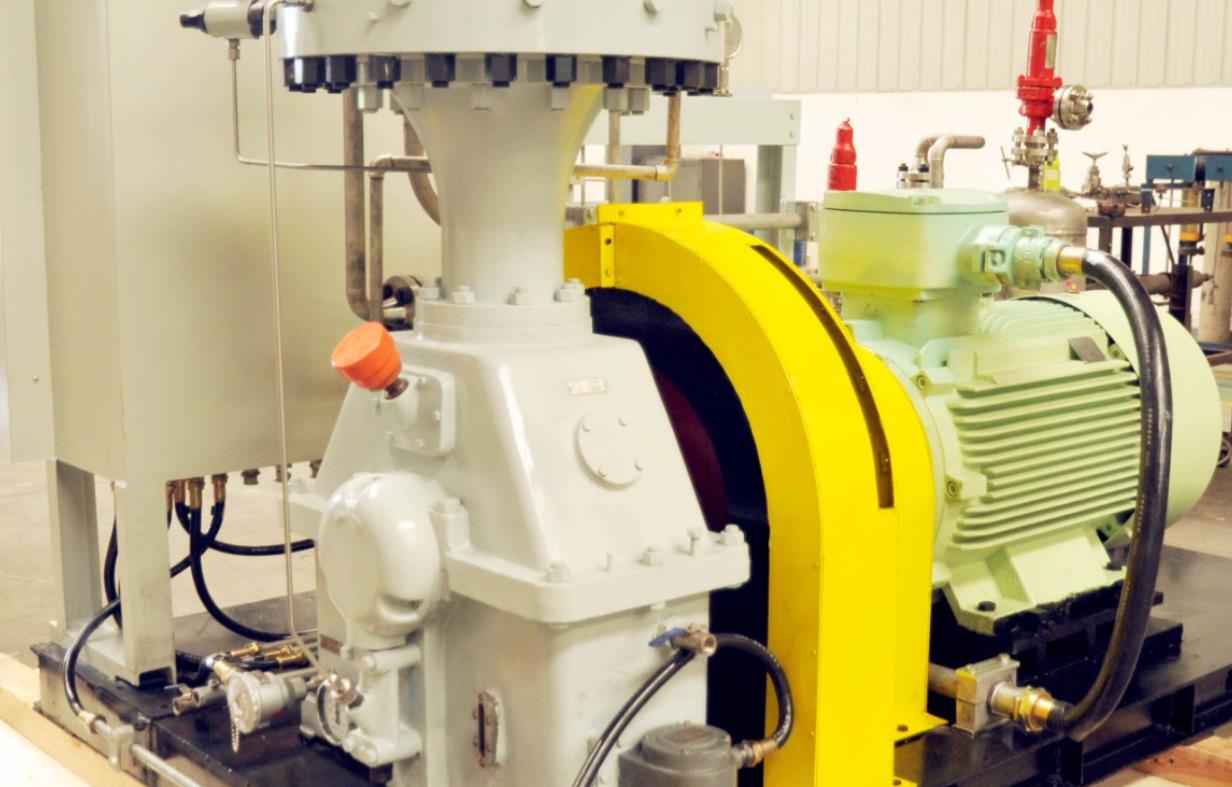
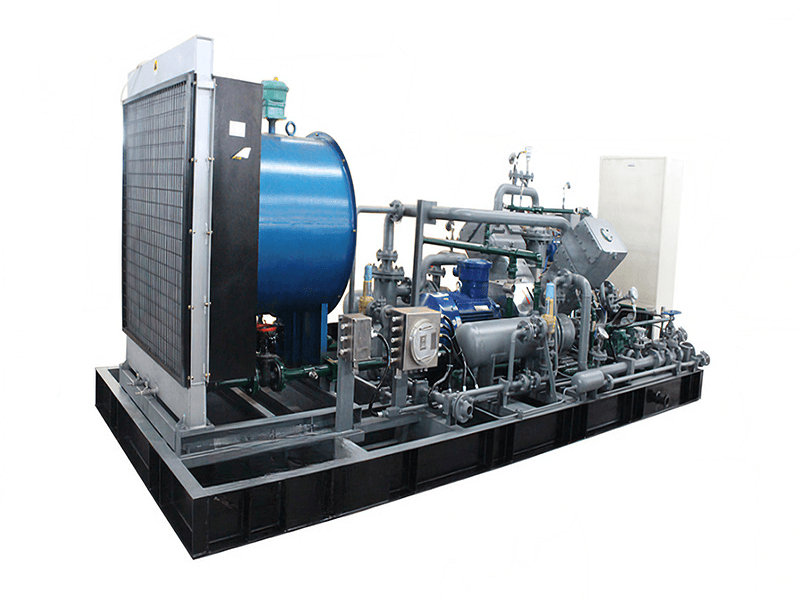
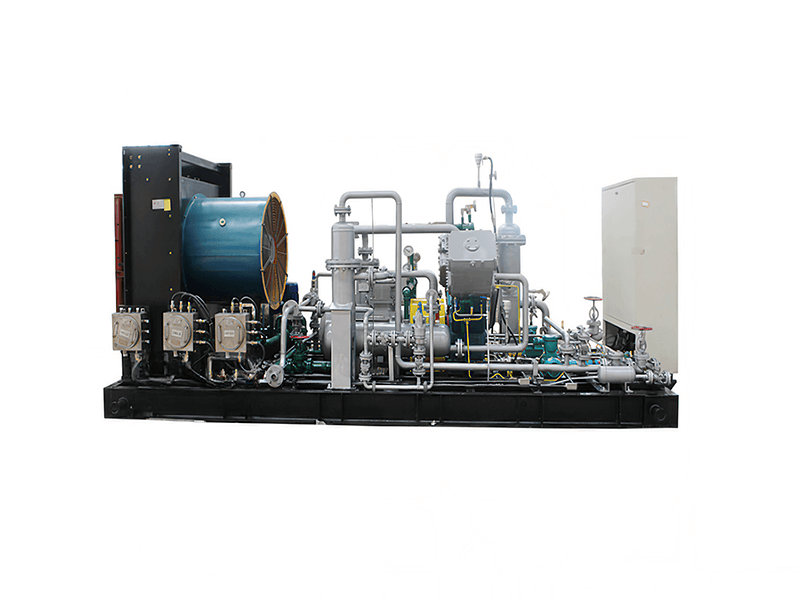
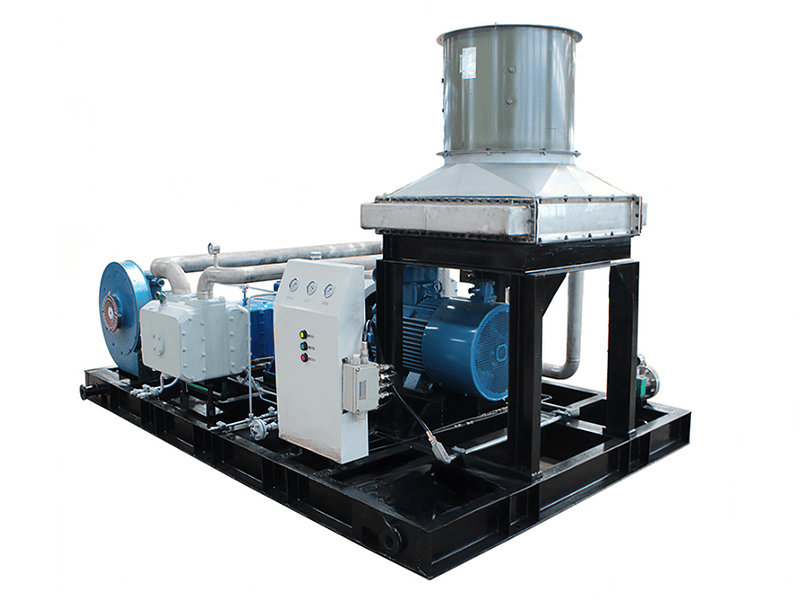
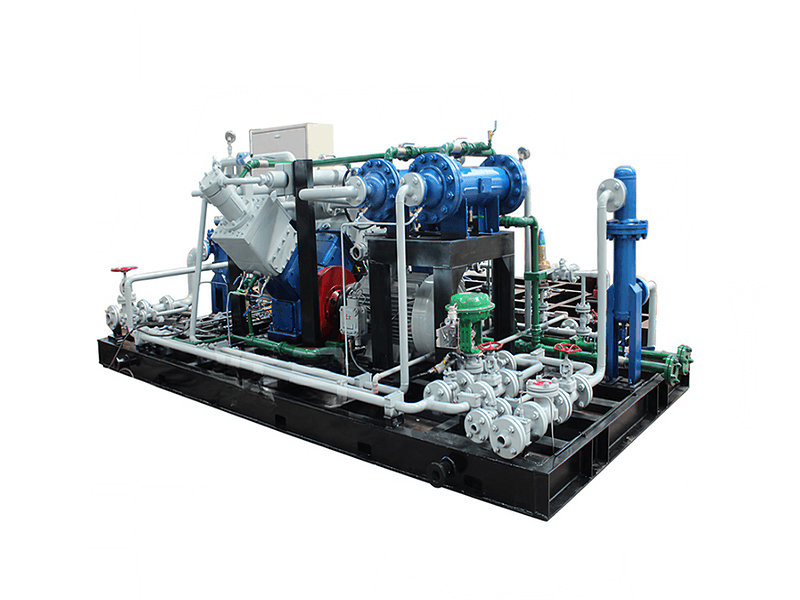
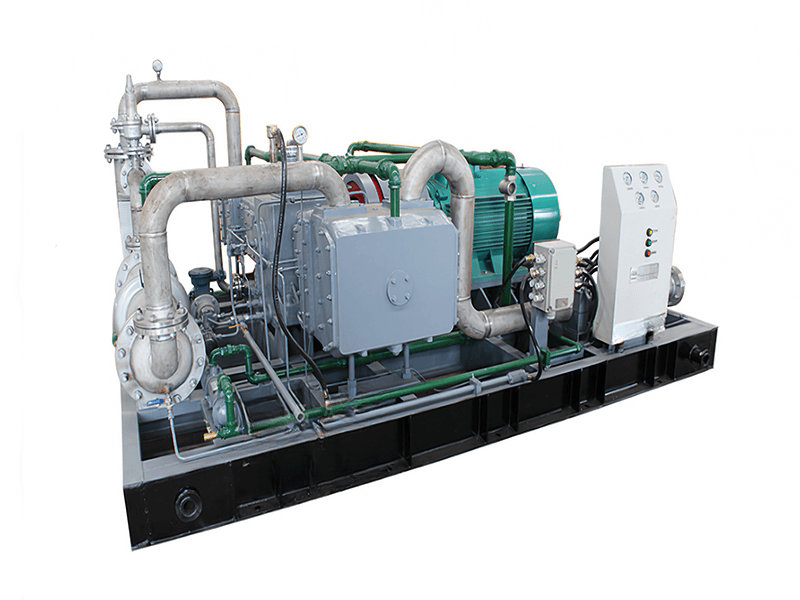
During natural gas extraction and gathering, the Wellhead Gas Compressor plays an irreplaceable role as a core piece of equipment. A proper understanding of its definition, types, working principles, and typical application scenarios is of great significance for field personnel in oil and gas fields to optimize production and enhance ultimate recovery.
I. What is a Wellhead Gas Compressor
Wellhead gas refers to the raw natural gas produced from underground reservoirs through wellbores. Depending on reservoir pressure and formation conditions, wellhead pressure can range from tens of megapascals down to near atmospheric pressure. As gas field development enters its middle and late stages, natural formation energy declines, causing a continuous drop in wellhead pressure. Consequently, the gas can no longer rely on its own pressure to enter the gathering pipeline network or processing facilities.
The core function of a wellhead gas compressor is to boost low-pressure wellhead gas so that it meets the pressure requirements of downstream pipelines or process equipment. In oil and gas production systems, the compressor acts as a "pressurization heart" – it actively draws in, compresses, and delivers the natural gas that formation energy can no longer push forward, thereby sustaining continuous production and improving ultimate recovery. Compared to venting or shutting in wells, compressor pressurization is widely recognized as an economically effective measure.
II. Main Types and Structural Components
Based on compression mechanisms and structural configurations, wellhead gas compressors are mainly classified into three types: reciprocating, screw, and centrifugal, each suitable for different operating conditions.
Reciprocating compressors achieve gas compression through the reciprocating motion of a piston within a cylinder. They offer a wide pressure range (up to 50 MPa and above) and high adiabatic efficiency (typically 85%–95%), making them particularly suitable for small-to-medium displacement, high-compression-ratio applications. They are currently the most common type for wellhead gas boosting. Screw compressors rely on a pair of intermeshing rotors to complete compression, providing smooth operation and continuous discharge. They are suitable for gas streams containing liquids or dust particles, but the pressure range generally does not exceed 4 MPa. Centrifugal compressors convert kinetic energy from high-speed impellers into pressure energy. They feature large single-unit capacity and small footprint but have a narrow high-efficiency range, typically used in large gathering stations or main pipeline boosting.
At the component level, all types share the following core systems: cylinder or compression chamber (for volume variation), piston or rotor (moving element), suction and discharge valve assembly (for flow direction control), and cooling system (including inter-stage and after coolers to reduce discharge temperature and prevent hydrocarbon polymerization or liquid slugging). Additionally, the lubrication system, sealing components (such as packing case or mechanical seals), and instrumentation control system directly affect compressor reliability and service life.

III. Working Principle Analysis
The thermodynamic process of a wellhead gas compressor can be divided into three consecutive stages: suction, compression, and discharge. Taking a typical reciprocating compressor as an example: When the piston moves away from the cylinder head, the volume inside the cylinder increases, pressure decreases, the suction valve opens under the external gas pressure, and wellhead gas is drawn into the cylinder. As the piston reverses direction, the volume decreases, the gas is compressed either adiabatically or isothermally, and both pressure and temperature rise. When the pressure inside the cylinder slightly exceeds the discharge pipeline pressure, the discharge valve opens, and the high-pressure gas is expelled into the downstream line. This cycle repeats every two revolutions (four-stroke) or one revolution (two-stroke), generating a periodic pulsating gas flow.
In terms of pressure and flow control, modern wellhead compressor packages are typically equipped with pneumatic or electric control valves, bypass circuits, and variable frequency drive systems. When suction pressure drops too low, the compressor automatically slows down or shuts down for protection. If discharge pressure exceeds the setpoint, a recirculation valve returns part of the gas to the inlet to avoid overpressure damage. For multi-stage compressor units, inter-stage pressure monitoring and coolers are also provided to ensure uniform compression ratios across stages and prevent excessive discharge temperatures. Flow control can be achieved by varying speed, clearance volume, or cylinder unloading, accommodating the gas production fluctuations of different wells.
IV. Typical Application Scenarios
Wellhead gas compressors are primarily used in the following three scenarios in actual production:
Low-pressure well production enhancement
: When wellhead pressure drops below the pipeline network pressure (typically 0.5–1.5 MPa), the well will cease flowing production. By placing a compressor at the wellhead or gathering station to boost pressure from 0.3–0.5 MPa to 1.2–1.8 MPa, the well can resume its ability to continuously carry liquids, significantly extending the stable production period.
Natural gas recovery
: During well testing flaring, pipeline purging, or maintenance venting, large quantities of natural gas are sent to flares, resulting in resource waste and carbon emissions. Using a mobile wellhead gas compressor to recover low-pressure vent gas and boost it into the pipeline or CNG trailers can achieve recovery rates exceeding 90%.
Pipeline network boosting
: For individual wells or low-pressure branch lines located far from the gathering station, insufficient pressure at the terminal end occurs due to pipeline friction losses. Installing a compression station at an appropriate location for intermediate boosting can increase the throughput of the entire pipeline network, avoiding the substantial investment of building new pipelines.
V. Summary
The wellhead gas compressor addresses the problem of insufficient formation energy in the late stages of gas field development through active pressurization, making it a key piece of equipment to ensure continuous production and improve economic performance. From reciprocating to centrifugal types, from single-stage to multi-stage compression, the selection and operation of compressors must be closely aligned with well dynamic parameters. A correct understanding of its working principles and structural composition is the foundation for field operation, maintenance, and fault diagnosis. It is no exaggeration to say that in modern natural gas extraction systems, the wellhead gas compressor is precisely the "heart" that drives every cubic meter of natural gas from the formation to the end user.