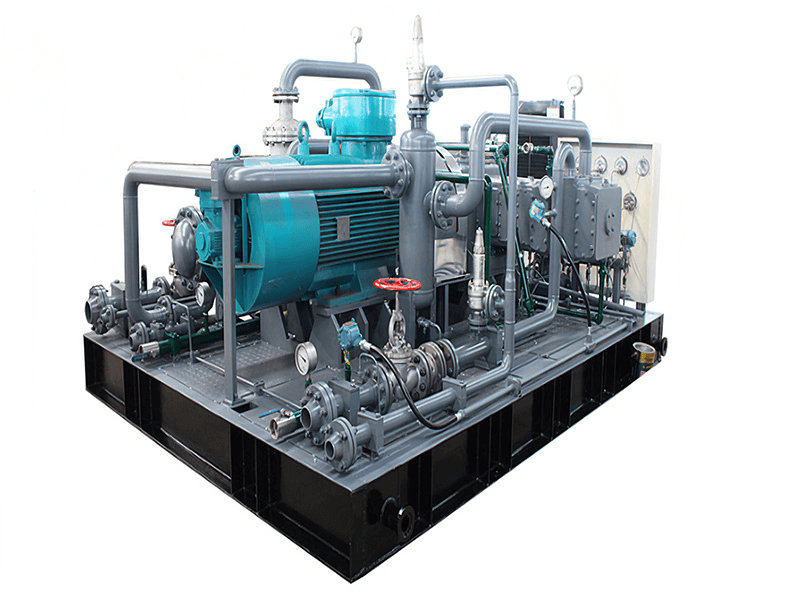
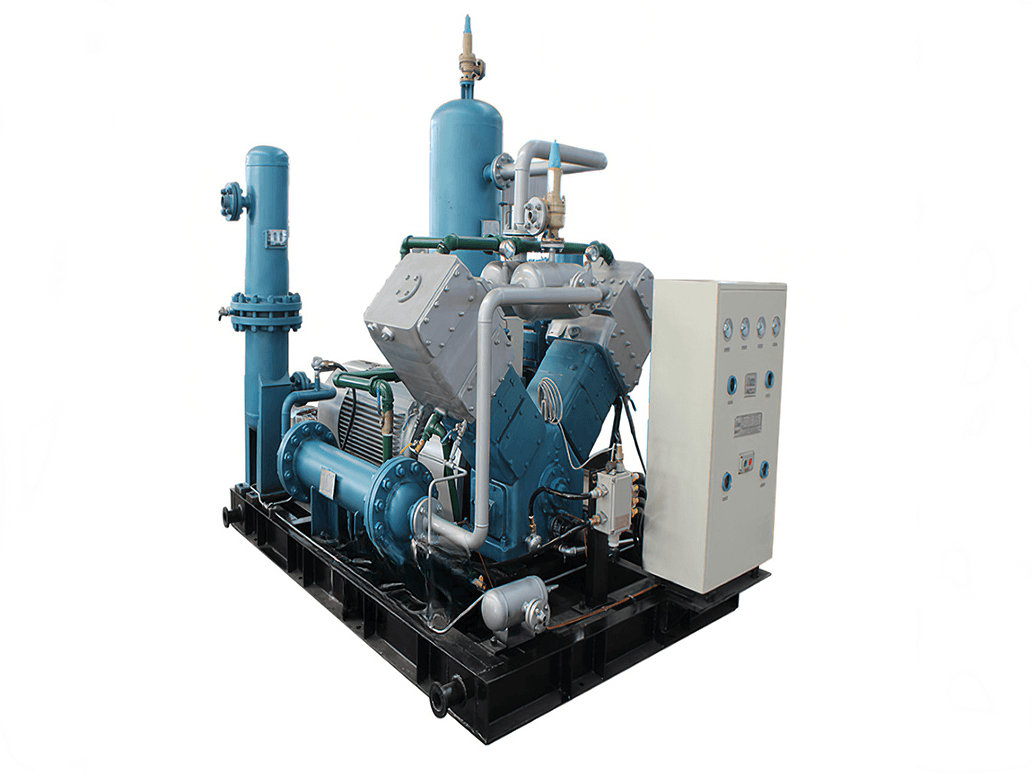
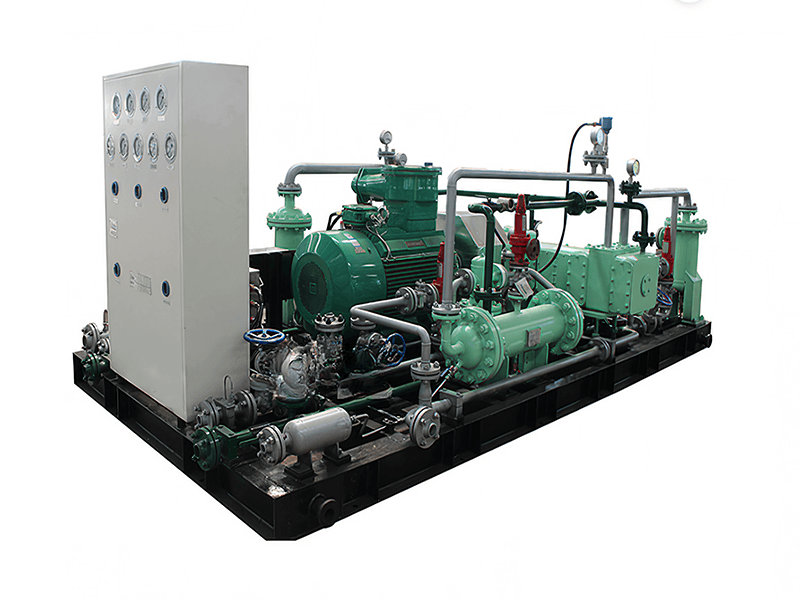
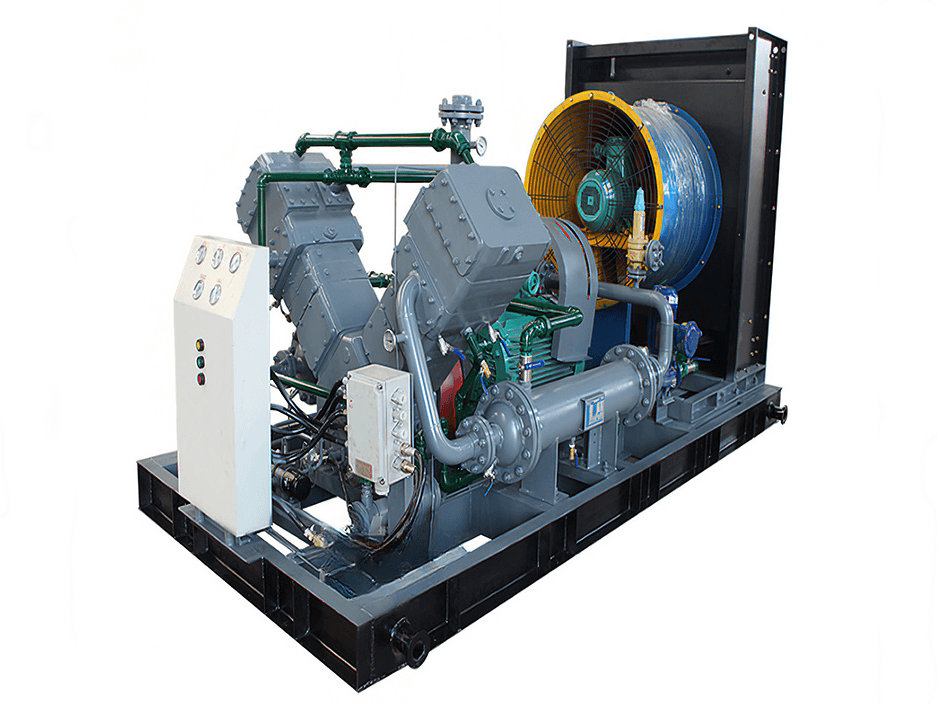
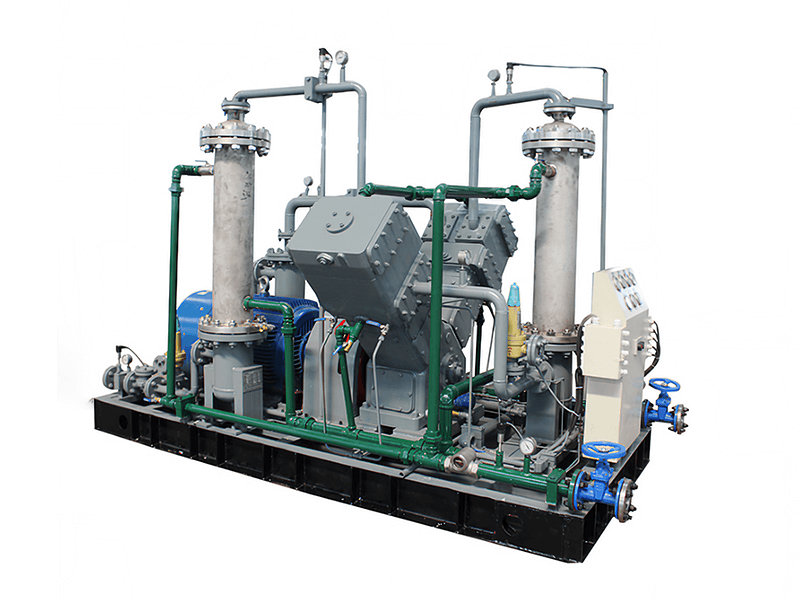
As a critical carrier of clean energy, hydrogen’s development relies heavily on core equipment within its industry chain—the Hydrogen Compressor—which is currently undergoing a pivotal transition from laboratory prototypes to large-scale commercial application. This transition is driven not merely by improvements in technical parameters, but more fundamentally by the continuous effort to overcome extreme safety challenges and to establish and refine a rigorous, unified technical standards framework. This represents a systems engineering endeavor to translate frontier scientific knowledge into industrial reliability.
Confronting Inherent Safety: Extreme Challenges Posed by Hydrogen’s Properties
The development of hydrogen compressors is, first and foremost, a contest with the physical properties of hydrogen. The primary safety challenges are concentrated in two areas:
Leak-Prevention Challenges at the Molecular Scale:
Hydrogen possesses the smallest molecular size and one of the lowest viscosities among natural gases, granting it exceptionally high permeability and diffusivity. This imposes near-absolute demands on compressor sealing technology. Materials and structures effective for sealing larger-molecule gases (e.g., natural gas) in traditional compressors are often inadequate for hydrogen. Minute pores or microscopic imperfections at sealing interfaces can become leakage pathways. Consequently, hydrogen compressors, especially high-pressure models for hydrogen refueling stations (HRS), must employ advanced technologies such as metal-to-metal seals, specialized high-performance polymers, or dynamic ionic liquid sealing. These approaches build fundamental leak-tight barriers rooted in materials science and structural design.

Energy Management in High-Pressure Environments:
Modern HRS are advancing towards pressure ratings of 70 MPa and even above 90 MPa to enable long-range operation for fuel cell electric vehicles. Compressing hydrogen to such pressures generates significant compression heat. If this heat is not removed promptly and effectively, it leads to sharp temperature rises within the compressor, accelerating material degradation and seal failure, and introducing serious safety hazards. Therefore, efficient thermal management systems (e.g., integrated cooling, optimized flow path design) and the use of specialized materials resistant to high temperatures and hydrogen embrittlement (such as high-grade stainless steels and specific alloys) are standard design requirements for high-pressure hydrogen compressors. Additionally, explosion-proof design for electrical components in high-pressure, hydrogen-rich environments—complying with international standards like ATEX and IECEx—is paramount.
Standards as the Pathway: The Commercialization Bridge from "Functional" to "Reliable"
Addressing these challenges solely through individual corporate R&D and testing cannot foster industry consensus or provide credible market-access benchmarks for large-scale commercialization. The establishment of standards is key to consolidating disparate technical solutions into common industry criteria, thereby propelling hydrogen compressors from "laboratory specimens" to "commercial commodities."
Standardization efforts in China have progressed rapidly in this field, aiming to construct a high-standard safety and reliability framework encompassing the entire equipment lifecycle:
T/CIET 1531-2025 "Safety Testing and Evaluation Methods for Key Components of Hydrogen Refueling Stations":
This standard focuses on the core application of HRS, establishing clear safety testing thresholds for key components, including compressors. It stipulates not only fundamental items like static pressure tests and fatigue life tests (e.g., tens of thousands of pressure cycles) but also emphasizes performance under simulated operational conditions: rigorous leak testing, safety valve actuation accuracy verification, and safety response assessments under failure modes. This means a hydrogen compressor must demonstrate its inherent safety through a series of stringent, quantifiable validation tests to gain market approval.
T/CIET 1599-2025 "Reliability Evaluation Methods for Hydrogen Compressors":
While safety is the baseline, reliability determines product market competitiveness and lifecycle cost. This standard moves beyond traditional factory acceptance tests, extending evaluation to long-term operational stability, maintenance intervals, and degradation rates of key performance indicators. It directs manufacturers and users to focus on core reliability metrics such as Mean Time Between Failures (MTBF) and sustained energy efficiency ratios. Through standardized evaluation methodologies, the industry can differentiate between marginally functional equipment and industrial-grade products capable of "continuous, efficient, low-maintenance" operation, thereby driving technological advancement toward higher reliability.
Conclusion: Safety and Standards Co-laying the Industrial Foundation
The evolution of hydrogen compressors from laboratory to commercialization clearly delineates a modern industrial equipment development trajectory: starting with a profound understanding of risks, employing systematic engineering methods, and ultimately codifying outcomes through authoritative standards. Continuously evolving safety technologies and increasingly robust standard systems act as twin pillars, jointly supporting the steady advancement of the hydrogen industry. They serve not only as technical safeguards for life and property but also as the essential foundation for building market confidence, mitigating investment risks, and ultimately realizing the large-scale development of a hydrogen economy. As technology continues to break new ground and application scenarios deepen, the safety and standard frameworks for hydrogen compressors will inevitably continue to evolve, providing a more reliable and efficient "hydrogen-powered heart" for the global energy transition.