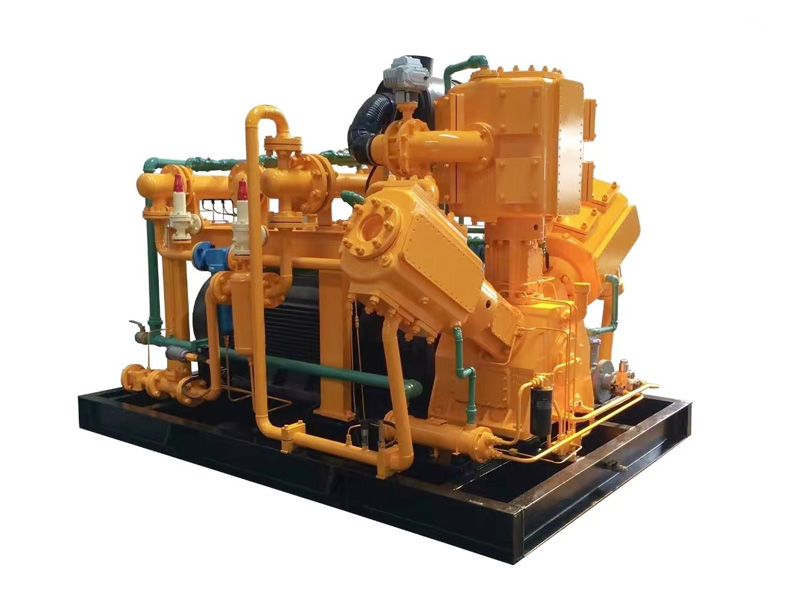
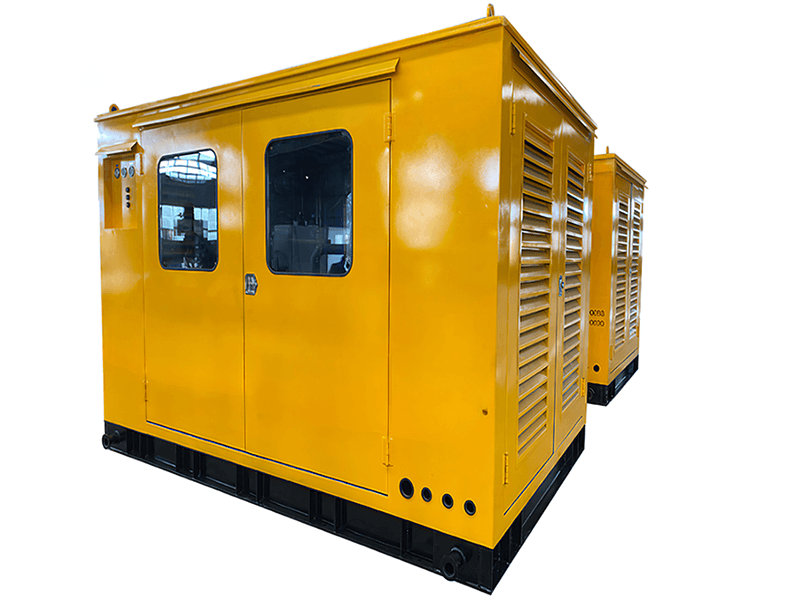
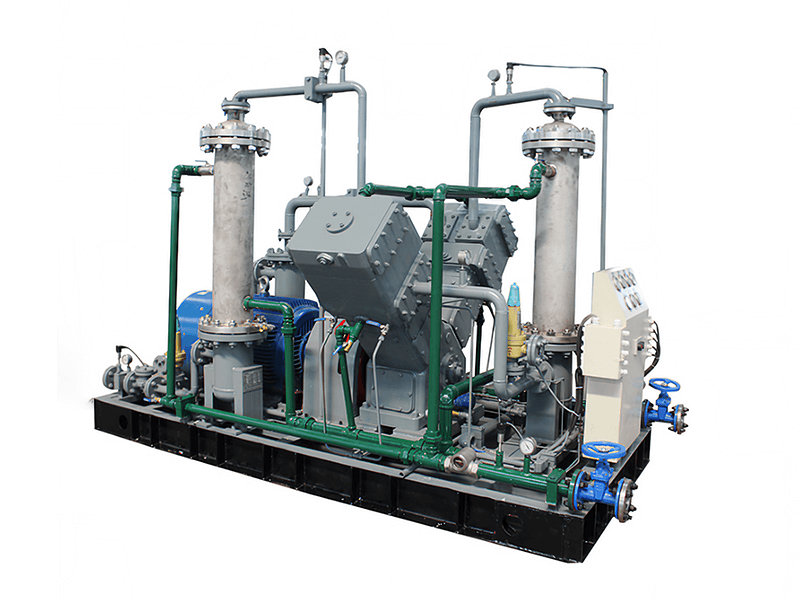
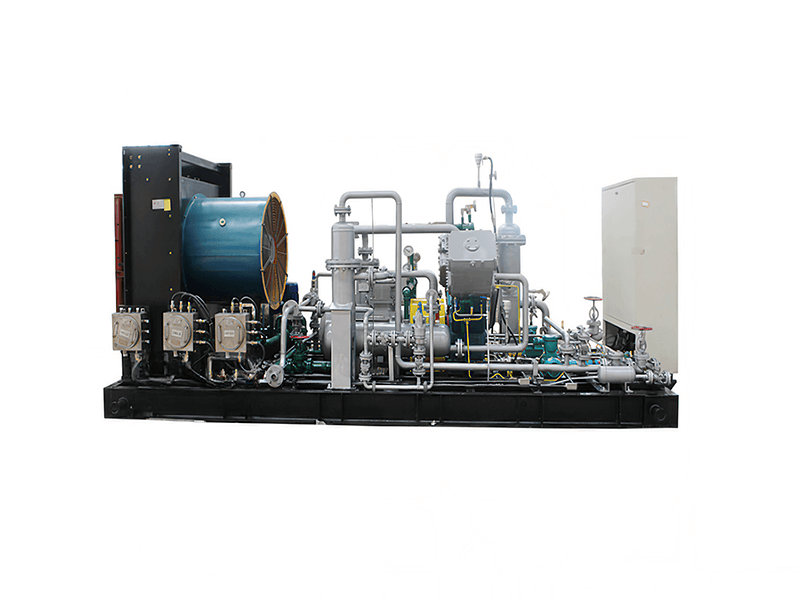
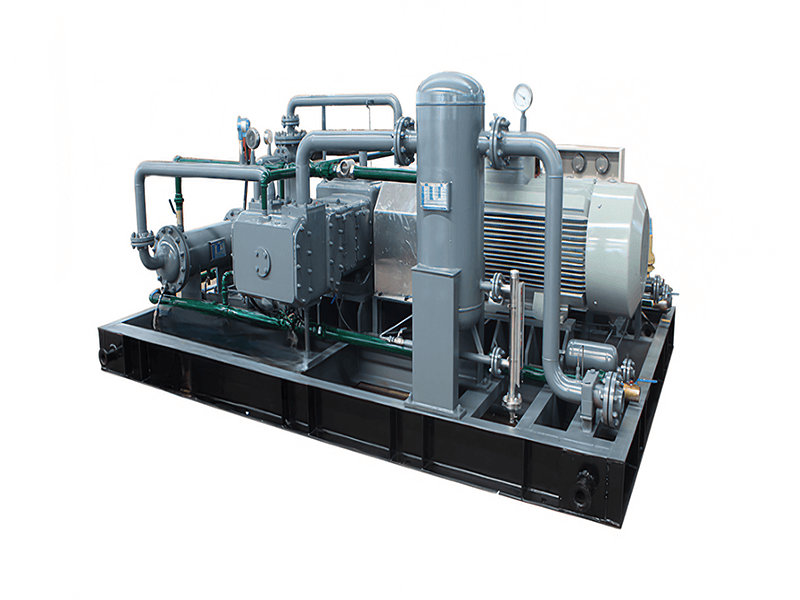
The installation quality and operation & maintenance level of a Wellhead Gas Compressor directly affect the unit's service life and production safety. From foundation construction to daily maintenance, every step must follow standardized procedures.
I. Core Steps for On�Site Installation
Foundation & Vibration Isolation
The compressor foundation shall be poured on solid undisturbed soil or properly compacted ground, with a bearing capacity ≥5–10 t/m² as required. The reinforced concrete foundation shall have a minimum thickness of 200 mm, and the embedded anchor bolts shall be positioned within a deviation of ≤±2 mm. Vibration isolators (e.g., spring or rubber pads) shall be installed between the unit and the foundation, with deflection controlled at 70%–80% of the rated value to reduce low�frequency vibration transmission.
Piping & Leak Tightness Testing
Suction and discharge piping shall be seamless steel tubes with internal rust removal to Sa2.5 level. Flow velocity shall be kept ≤15–20 m/s to minimize pressure loss and noise. Flange alignment deviation shall be ≤0.5 mm/m; forced mating is strictly prohibited. After installation, a strength test at 1.5 times the maximum working pressure (hold for 30 min) and a leak tightness test at 1.05 times the working pressure (using leak detection fluid or electronic detector) shall be performed. Before putting into service with natural gas, the system shall be purged with nitrogen until the oxygen content is <2 vol%.
Electrical & Control System Wiring
Power cables and control cables shall be routed separately to avoid electromagnetic interference. The PLC (or dedicated controller) shall undergo point�to�point commissioning to verify alarm and shutdown logic, including low inlet pressure, high discharge pressure, low lubricating oil pressure, etc. The emergency stop button must be able to interrupt the power circuit under any condition.

II. Daily Operating Monitoring Parameters
Vibration
At the crankshaft bearing and cylinder positions, vibration velocity (RMS) shall be measured according to ISO 10816. For reciprocating compressors, normal value ≤11.2 mm/s; >18 mm/s requires shutdown and repair.
Temperature
Discharge temperature: ≤160°C (reciprocating) or ≤120°C (screw). Lubricating oil temperature: 45–75°C. Cooling water temperature difference across the cooler: 5–10°C.
Pressure
Deviation of suction and discharge pressure at each stage shall not exceed ±5% of design values. Abnormal interstage pressure indicates valve leakage or piston ring wear.
Lubricating Oil Level
Maintain at the middle line of the sight glass. Take oil samples periodically to analyze viscosity, water content, and acid number.
Alarm & Shutdown Logic Check
Simulate each safety protection point weekly (e.g., low inlet pressure, high discharge pressure, high temperature, low oil pressure, motor overload) to confirm that alarms and shutdowns function correctly.
III. Scheduled Maintenance Plan
Daily
Check oil level, coolant level, and gas leaks; record suction/discharge pressure and temperature; listen for abnormal noises.
Weekly
Clean the air filter; check all bolted connections; drain condensate from gas�liquid separators.
Monthly
Change lubricating oil (first change after the first month of operation, then every 500–1000 operating hours); adjust belt tension or coupling alignment; test safety valves.
Quarterly
Replace suction/discharge valve assemblies; measure cylinder clearance volume; clean cooler cores; calibrate instruments.
Consumable Replacement Intervals
Valve plates (reciprocating): 4,000–6,000 hours or when flow drops / interstage pressure becomes abnormal.
Piston rings: 8,000–10,000 hours (if cylinder wear exceeds 0.1 mm, rebore and fit oversized rings).
Seals (packing rings, O�rings): every 6,000 hours or when oil/gas leakage appears.
Oil filter element: replace with each oil change.
IV. Rapid Diagnosis of Typical Faults
Insufficient Flow
Possible causes: clogged air filter, leaking valve plates, worn piston rings, excessive clearance volume. Actions: clean filter element; check valve assembly sealing; measure cylinder pressure; adjust clearance shims.
Abnormal Noise
Metallic knocking: excessive crosshead�shoe clearance, loose connecting rod bearing shell, piston hitting cylinder head. Immediate shutdown and adjustment / bearing replacement required.
High�pitched squeal: broken valve spring or valve plate flutter – replace valve assembly.
Overheating
High discharge temperature: insufficient cooling water, fouled interstage cooler, excessive compression ratio. Actions: check cooling water circuit; clean cooler; verify bypass valve not open unintentionally.
Bearing overheating: degraded oil or blocked oil passage – change oil and clean oil passage.
Gas Leakage
Leaks at flanges, valves, or packing case: locate with leak detection fluid, tighten bolts or replace seals. For severe leaks, shut down and depressurize before handling.
V. Safety Operating Code
Natural Gas Leak Emergency Procedure
When a flammable gas concentration reaches 10% of the lower explosive limit (LEL), immediately:
① Cut off compressor power (remote or local emergency stop).
② Close suction and discharge valves.
③ Start the ventilation system (if indoors).
④ Evacuate to an upwind location and report to the control room.
⑤ After the concentration drops to a safe level, enter with an air�breathing apparatus to locate the leak source.
No�Fire Zone & Personal Protective Equipment (PPE)
Smoking, hot work, and carrying non�explosion�proof electronic devices are strictly prohibited within a 15 m radius of the compressor unit. On�site personnel must wear anti�static workwear, hard hat, safety glasses, and steel�toe work boots. During high�pressure gas operations or leak testing, add a face shield and impact�resistant gloves. Before any maintenance, depressurize the unit and follow lockout/tagout procedures.
VI. Summary
Neglect at any stage – from foundation vibration isolation to fault handling – can lead to unplanned shutdowns or safety incidents. Establishing a standardized inspection checklist, strictly following consumable replacement intervals, and reinforcing emergency drills can significantly improve compressor reliability and lifecycle cost�effectiveness. For remote well sites, remote monitoring and on�line vibration analysis systems are recommended to progressively achieve predictive maintenance.