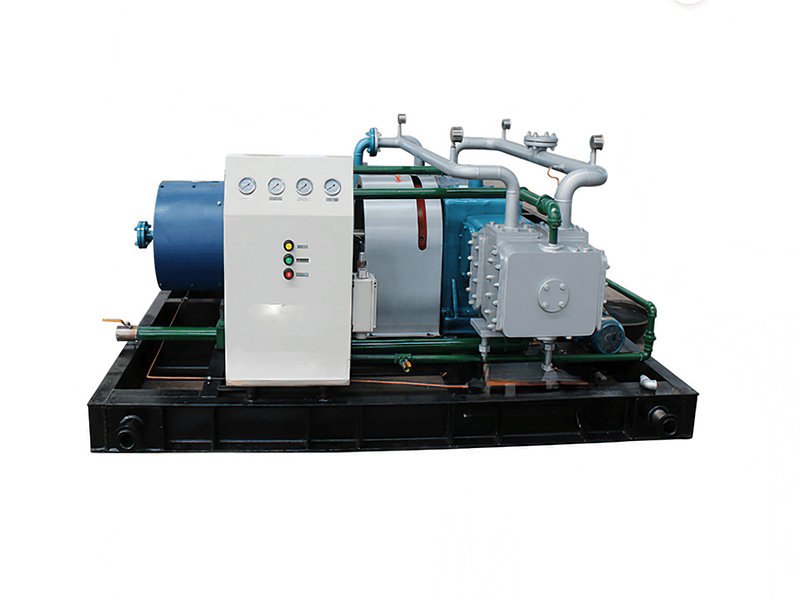
Accelerated by digitalization and low carbon transition in oil & gas fields, Wellhead Gas Compressor technology is evolving from traditional electromechanical equipment toward intelligent, modular, and new energy integrated solutions. Remote well sites still face high manual maintenance costs, delayed failure response, and low energy efficiency. This article analyzes current pain points and explores future trends in intelligent monitoring, predictive maintenance, new energy drivers, and skid mounted design.
I. Current Technical Pain Points
– Wells in deserts, gobi areas, or mountains rely on periodic patrols, each round trip taking several hours. Harsh weather makes coverage difficult, leading to frequent “running with faults.”
Slow response to sudden failures
– Traditional hardwired alarms trigger only after a fault occurs. From shutdown to arrival of maintenance personnel averages 4–8 hours, and a single unscheduled shutdown can lose tens of thousands of cubic meters of production.
Energy efficiency still improvable
– Many units lack VFD or load control, relying on bypass recycling to regulate discharge pressure, causing 10–30% wasted power. Compression waste heat (especially gas engine exhaust) is not recovered, resulting in low overall energy utilization.
II. Intelligent Monitoring System
– On site acquisition of pressure, vibration, temperature, speed, and oil level. The gateway uses lightweight algorithms to upload data via 4G/5G only when anomalies occur or at scheduled intervals, saving communication traffic and power at remote sites.
Cloud based centralized monitoring
– Multi well parameters are displayed on dashboards. Technicians can remotely view real time data, trends, and alarms, and issue start/stop commands or adjust pressure setpoints. Mobile APP pushes critical alarms, greatly reducing response time.

III. Predictive Maintenance (PHM)
– Suction/discharge valves are the most vulnerable parts. A high frequency vibration sensor (≥20 kHz) captures valve opening/closing characteristic spectra. Using envelope demodulation, when sideband energy abnormally increases or fundamental amplitude drops below a threshold, the algorithm predicts fracture or leakage 48–72 hours in advance, enabling condition based replacement.
Online oil quality analysis
– In line oil sensors monitor dielectric constant, viscosity, water content, and ferrous particle concentration. An alert is triggered when dielectric constant exceeds baseline by 10% or water content >0.1%. Increased ferrous particles indicate early wear of piston rings or bearings, shifting maintenance from emergency repair to planned shutdown.
IV. New Energy Integration Attempts
– In sun rich northwestern areas, 500 W – 2 kW PV panels plus batteries provide independent power for control systems, sensors, and communication equipment, achieving “zero grid” operation for auxiliary systems.
Wind/gas hybrid drive
– In windy but off grid areas, a small wind turbine and gas engine form a hybrid system: wind power preferentially assists the compressor drive or charges batteries; during calm periods the gas engine drives the compressor. This reduces wellhead gas consumption by about 15–25% and cuts carbon emissions.
V. Modular and Skid Mounted Design Trends
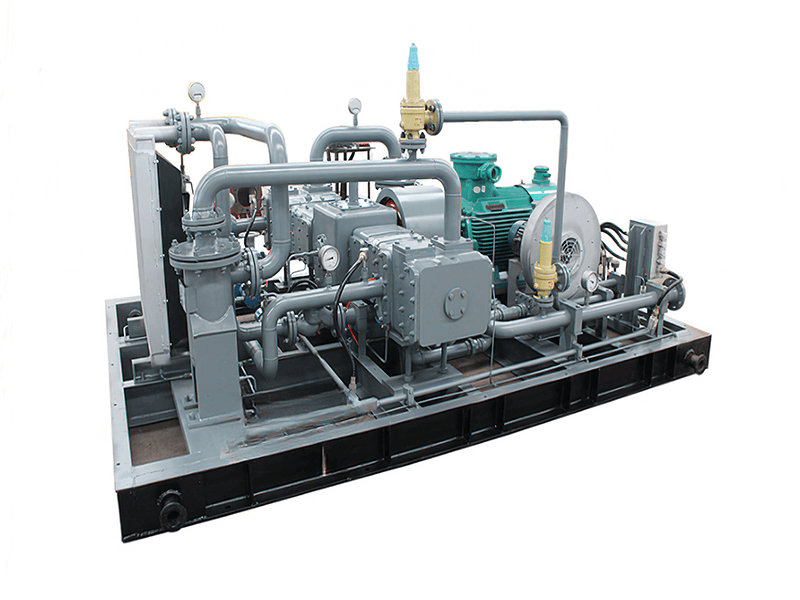
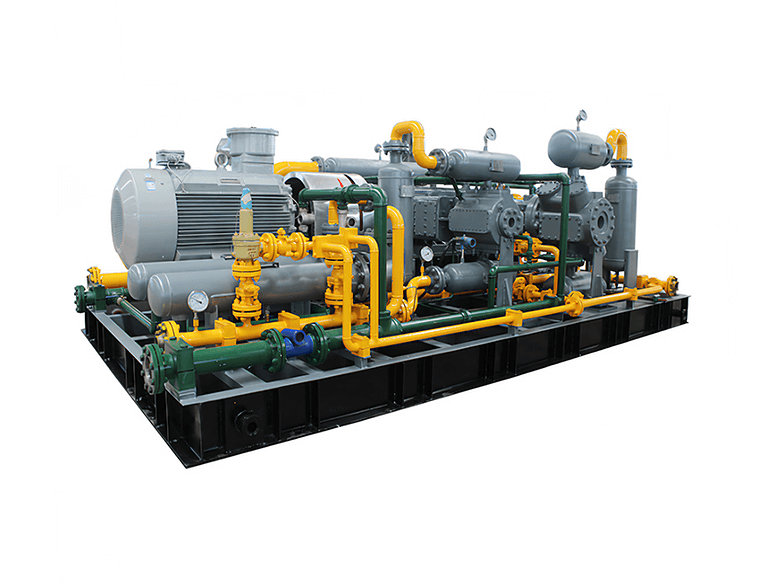
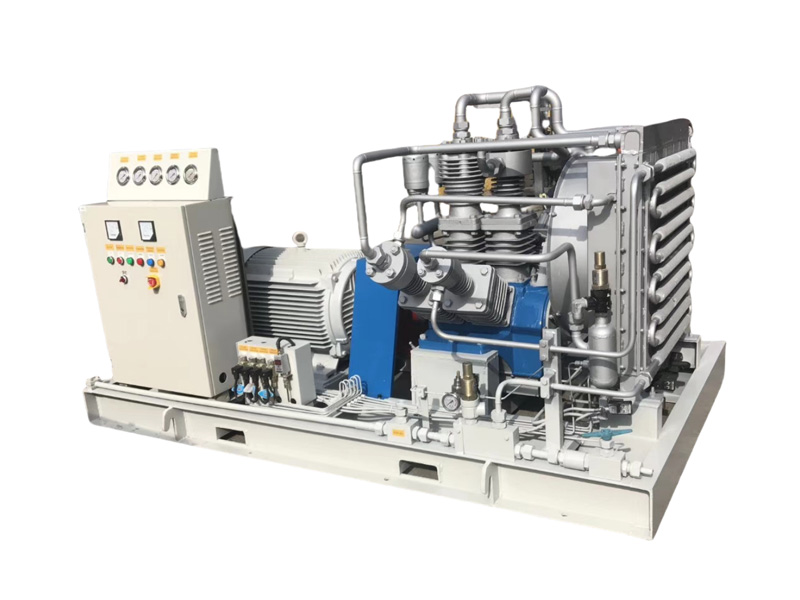
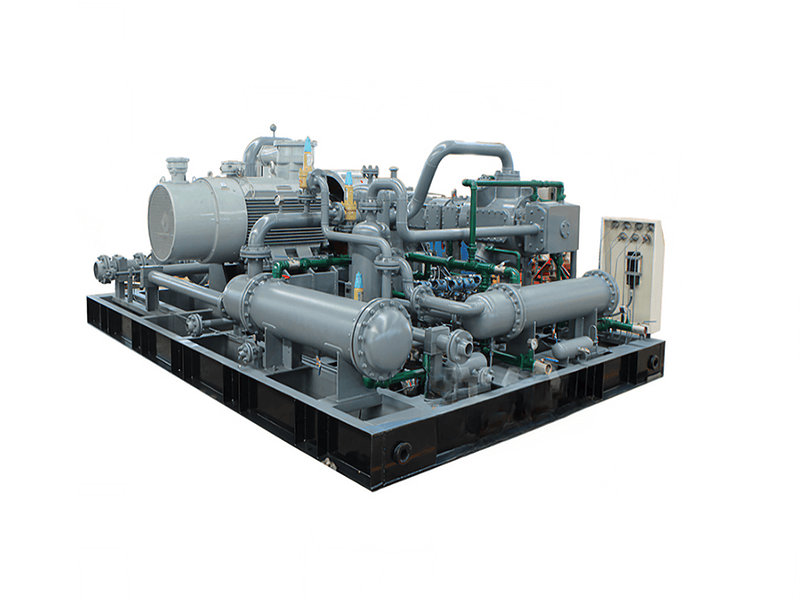
– Skid mounted units integrate compressor, driver, cooling system, control panel, and piping on steel skids, fully tested before delivery. On site, only level ground (no concrete foundation) is required; commissioning within 24 hours. When a well is depleted, the skid can be lifted and moved to a new well, ideal for incremental field development.
Suitable for unconventional fields (shale gas, CBM)
– Shale gas production can decline 60–70% in the first year. Mobile skid units can be flexibly reassigned: large capacity units in the early stage, smaller units later, even one unit serving multiple wells sequentially. For coalbed methane (low single well output, dense well pattern), a cluster of micro skid mounted reciprocating compressors can be used, each covering 3–5 wells, coordinated via wireless communication.
VI. Outlook: Unattended Wellhead Compressor Stations Become Normal
Combining edge intelligence, 5G telemetry, PHM algorithms, and new energy microgrids, within 3–5 years wellhead compressor stations will achieve truly “unattended, periodic patrol, condition based maintenance”:
Compressor automatically starts/stops and adjusts load based on inlet pressure, no human intervention.
Cloud based PHM predicts valve life and oil degradation in advance; maintenance teams plan spare parts and routes.
Solar backup ensures uninterrupted power for instrumentation and communication.
Skid mounted design reduces station construction from months to days.
These integrated technologies can lower O&M costs by over 60% and raise overall energy efficiency to above 85% (including waste heat recovery), transforming wellhead boosting from “passive, manned protection” to “data driven, proactive value creation.”