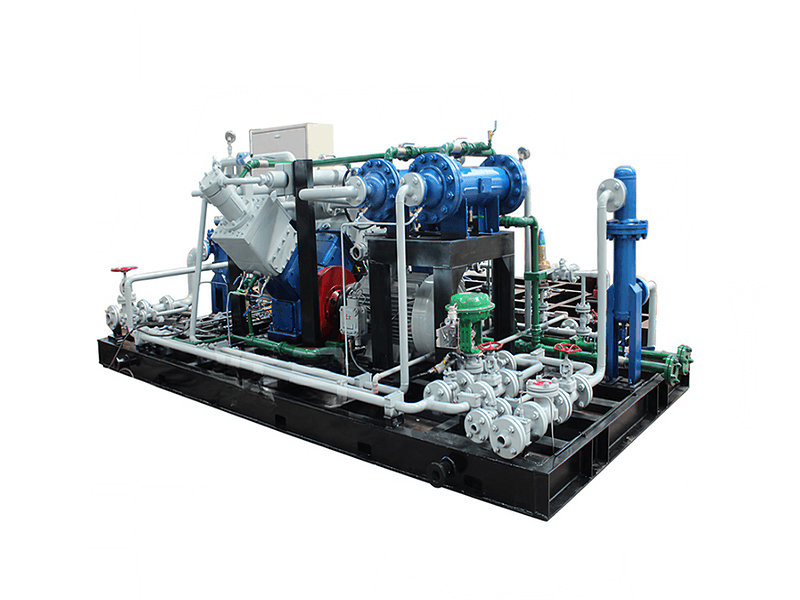
1. Introduction: Drive Mode Determines Operational Flexibility and Energy Architecture
The drive mode of a chlorine gas compressor not only defines the operating characteristics of the equipment itself but also exerts a profound influence on the plant's overall energy mix, electrical load distribution, and production cost structure. In large-scale chlor-alkali and chemical projects, motor drive and steam turbine drive represent the two mainstream solutions, which differ markedly in terms of technical maturity, capital intensity, regulation performance, and operating costs. The selection process should transcend the equipment selection itself, requiring a comprehensive trade-off from the perspective of the overall plant energy balance and life-cycle economics.
2. Electric Motor Drive Scheme
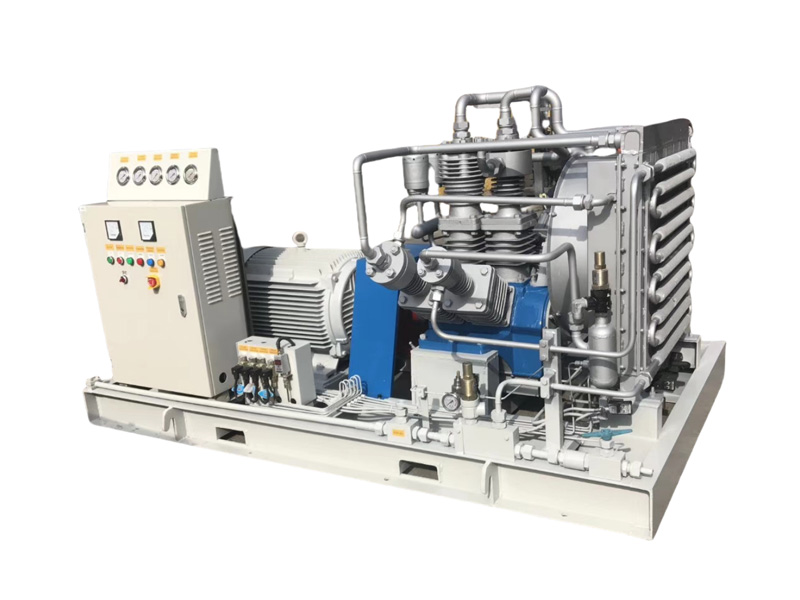
Electric motor drive is currently the most widely adopted power solution for chlorine gas compressors, owing to its mature technology and low implementation threshold. The drive system primarily comprises the motor, coupling, and frequency-conversion or fixed-speed control devices, with a relatively compact configuration.
In terms of advantages, the electric drive is characterized by significantly lower capital investment; for an equivalent power rating, the cost of the motor and its associated electrical facilities is considerably lower than that of a steam turbine system. Start-up operations are straightforward, and control precision is high. Particularly when combined with Variable Frequency Drive (VFD) technology, it enables precise matching of compressor flow and discharge pressure, with fast response times, making it suitable for operating conditions with frequent load fluctuations. Furthermore, grid power is widely available and does not depend on the plant's steam system balance, offering strong operational independence.
However, electric drives are not without limitations. Large motors draw substantial starting inrush currents, imposing higher demands on the plant's grid capacity, and may necessitate the installation of soft-start or VFD starting devices to mitigate grid impact. From an operating cost perspective, electricity consumption expenditure is significantly affected by fluctuations in grid tariffs, introducing long-term cost uncertainty in regions with deregulated power markets. For plant sites located far from the grid or with restricted grid capacity, the feasibility of large-scale electric drive solutions is considerably diminished.

3. Steam Turbine Drive Scheme
Steam turbine drive operates on the principle of thermo-mechanical energy conversion, utilizing steam generated by waste heat boilers or auxiliary boilers to expand and perform work, thereby driving the compressor. This approach is a typical application of cogeneration and cascaded energy utilization.
The core advantage of the steam turbine drive lies in its synergy between plant steam balance and power output. For chlor-alkali plants with waste heat resources or by-product steam, adopting a turbine drive scheme allows low-grade steam that might otherwise be vented to be converted into mechanical energy, substantially improving the overall thermal efficiency of the plant. Turbine units offer a wide speed regulation range and can maintain high efficiency across a broad load spectrum, making them particularly suitable for high-power, continuous production scenarios with constant or slowly varying loads. Moreover, the turbine drive does not rely on external grid capacity, avoiding the grid impact caused by large motor starts, and offers distinct reliability advantages under unstable power supply conditions or islanding operation modes.
Nevertheless, the cost of steam turbine drive is equally prominent. The turbine unit itself entails a high capital outlay, and it requires extensive auxiliary facilities, including condensers, vacuum ejectors, condensate pumps, and circulating cooling water systems, resulting in significantly increased civil works and installation workloads. It also imposes stringent requirements on the stability of steam supply parameters (pressure, temperature, and flow rate), as steam fluctuations directly affect the smooth operation of the compressor. In plants without a stable waste heat source, the economic viability of the turbine drive scheme will be substantially compromised.
4. Economic Comparison and Applicable Scenarios
From a capital expenditure (CAPEX) perspective, the motor drive scheme is significantly superior. For equivalent power, the equipment procurement and installation costs of an electric drive system are typically only 50% to 70% of those of a turbine drive system, without the need for complex steam piping and auxiliary systems.
From an operating cost perspective, a comprehensive assessment of electricity tariffs and steam costs is required. If measured by energy consumption cost per unit of compression work, the electric drive holds a distinct advantage in regions with low electricity tariffs (e.g., below RMB 0.4/kWh); conversely, if the plant has surplus low-pressure steam with a low opportunity cost, the turbine drive may yield lower unit energy costs. Life-cycle cost (LCC) estimation should encompass initial capital outlay, annual energy expenditures, major overhaul costs, and auxiliary system operation and maintenance expenses, typically evaluated through discounted comparisons over a 10- to 15-year operating horizon.
In summary, plants with high electricity tariffs but surplus steam should prioritize the turbine drive scheme; those with reliable power supply and low tariffs should opt for the electric drive. For special environments such as industrial park cogeneration, islanding operation, or restricted grid capacity, the steam turbine drive is often the only viable option.
5. Selection Recommendations
The final determination of the drive mode should be based on the plant's overall energy balance sheet, incorporating dynamic economic accounting of the alternative schemes to define the sensitivity thresholds of electricity tariffs and steam costs. For chlorine gas compressors in critical process sections, a dual-drive standby arrangement may be considered, i.e., configuring two compressor units with different drive modes. Under normal operating conditions, the more economically favorable unit operates, while the standby unit can seamlessly switch over in the event of main drive failure or abnormal energy supply, thereby balancing both economy and reliability. Furthermore, for existing turbine-driven units, the technical feasibility of retrofitting a supplementary VFD electric drive assist system should be evaluated concurrently to enhance overall operational efficiency under variable-load conditions.