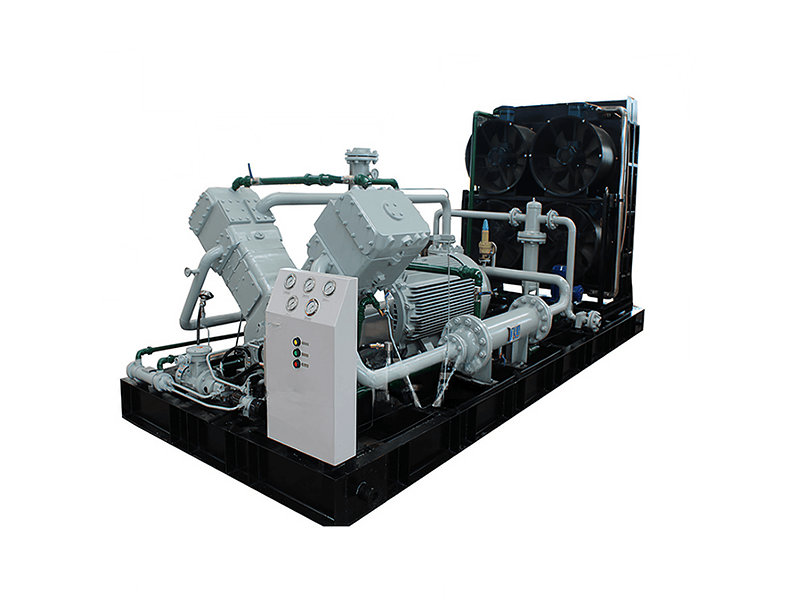
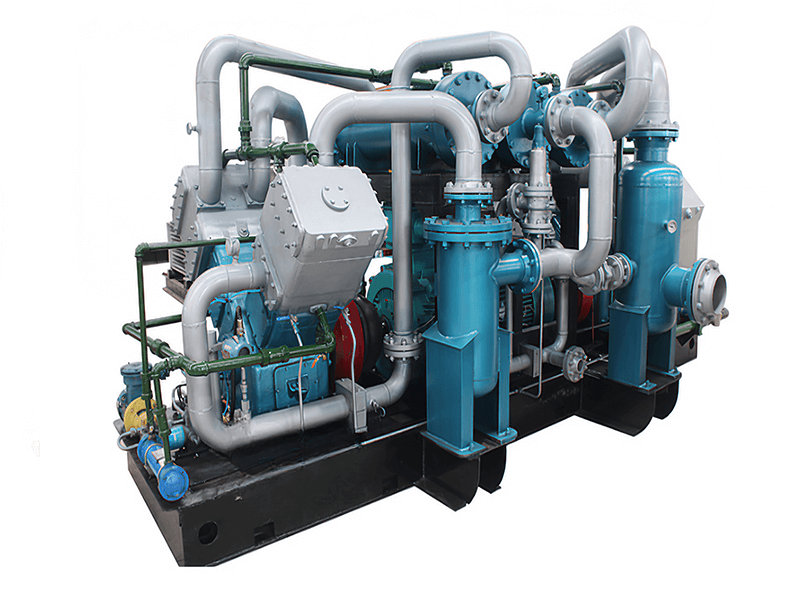
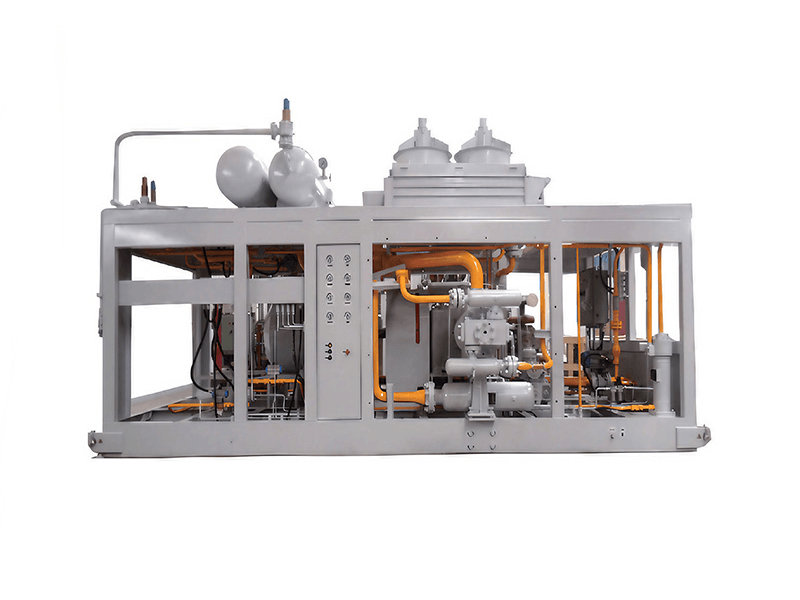
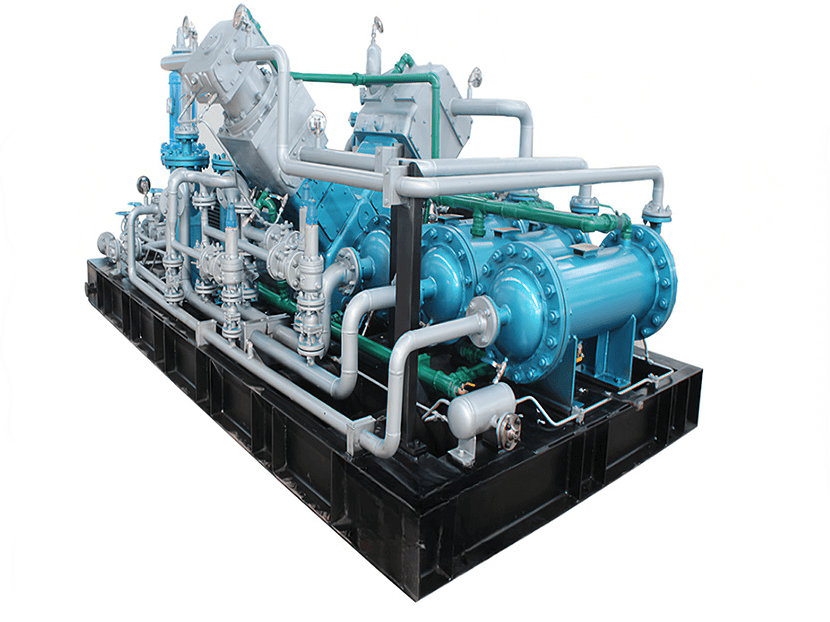
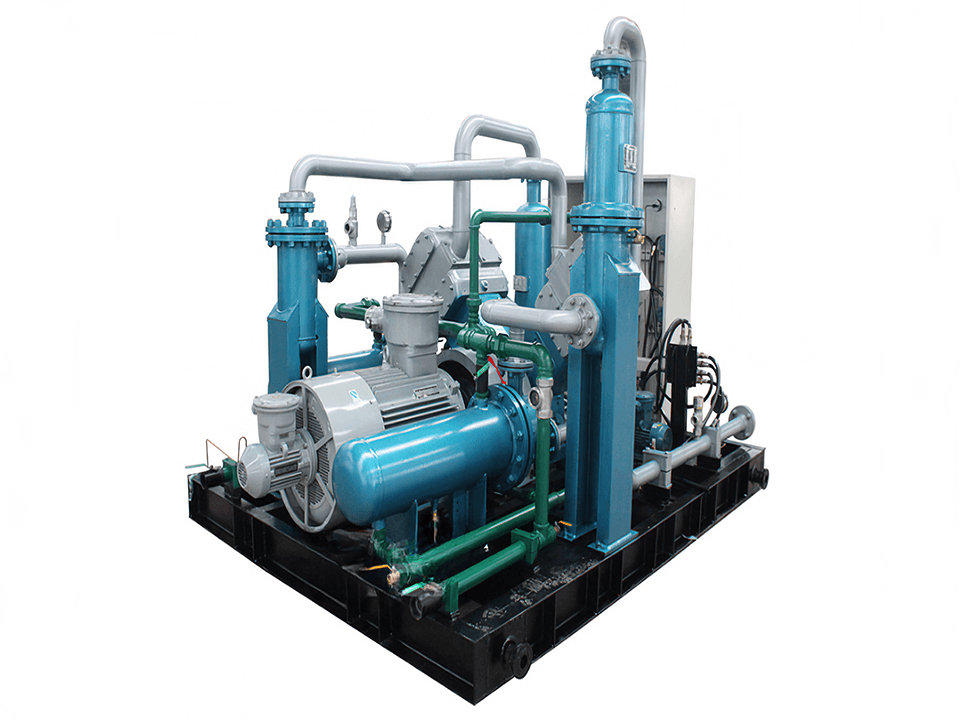
In the history of refrigeration technology, ammonia (NH3, designation R717) occupies an irreplaceable position. In 1876, the German engineer Carl von Linde built the first ammonia compressor, opening a new era of artificial refrigeration. Over nearly 150 years, ammonia refrigeration systems have continued to play a key role in industrial refrigeration, food freezing, petrochemicals, pharmaceutical manufacturing, and other fields, owing to their excellent thermodynamic performance and environmental characteristics.
Four Core Components of the Ammonia Refrigeration Cycle
The ammonia vapor-compression refrigeration cycle consists of four core thermodynamic processes, each corresponding to a key item of equipment:
Evaporator:
Low-pressure, low-temperature liquid ammonia absorbs heat from the medium being cooled within the evaporator, undergoes phase change and vaporizes into low-pressure, low-temperature superheated ammonia vapor, thereby producing the refrigeration effect. This process follows the boiling heat transfer mechanism, and the evaporation temperature depends on the system operating pressure.

Compressor:
Low-pressure, low-temperature ammonia vapor from the evaporator enters the compressor. After mechanical compression, both pressure and temperature rise significantly, and the vapor becomes high-pressure, high-temperature superheated ammonia vapor. The compression process can be approximated as isentropic, and its power consumption accounts for the vast majority of the total energy consumption of the system.
Condenser:
The high-pressure, high-temperature superheated ammonia vapor flows through the condenser and exchanges heat with cooling water or air. After releasing sensible heat and latent heat, it condenses into high-pressure, ambient-temperature liquid ammonia. The condensing temperature is determined by the cooling medium temperature and heat transfer conditions.
Throttling device (expansion valve):
When high-pressure, ambient-temperature liquid ammonia passes through the throttling element, adiabatic flash occurs; the pressure drops sharply and the temperature decreases simultaneously, forming low-pressure, low-temperature wet vapor, which enters the evaporator to begin a new cycle.
The four processes above are connected in sequence to form a complete vapor-compression refrigeration cycle.
Core Function of the Compressor
The compressor is the power source of the refrigeration cycle and is often likened to the “heart” of the system. Its core functions are reflected in two aspects. First, it raises the low-pressure ammonia vapor produced in the evaporator to a pressure level sufficient for condensation by the cooling medium at ambient temperature. If compression were not carried out, the condensing temperature of the ammonia vapor would be lower than the ambient temperature, and the condensation heat rejection process could not occur spontaneously. Second, the continuous operation of the compressor maintains the pressure difference between the high- and low-pressure sides of the system, driving the ammonia working fluid to circulate continuously through the piping and achieving continuous refrigeration. From the perspective of energy conversion, the compressor converts input electrical energy into mechanical energy and then into the pressure energy and thermal energy of the ammonia vapor, ultimately achieving refrigeration through heat exchange.
Configuration of an Actual Refrigeration System
In actual engineering, ammonia refrigeration systems are far more complex than the basic cycle. In addition to the four major components, auxiliary equipment must also be provided, including an oil separator (to separate lubricating oil carried by the compressor discharge), an ammonia receiver (to store condensed liquid ammonia and regulate liquid supply), an ammonia liquid separator (to prevent liquid carryover from the evaporator outlet from entering the compressor), and an intercooler (for interstage cooling in a two-stage compression system).
Taking a two-stage compression system as an example, the typical process is as follows: low-pressure ammonia vapor is compressed by the low-pressure compressor and discharged into the oil separator; it then enters the intercooler for cooling and subsequently enters the high-pressure compressor for further compression. The high-pressure discharge is condensed into liquid ammonia in the condenser and stored in the ammonia receiver; after throttling and pressure reduction, it is fed to the evaporator for refrigeration. The rational configuration of various auxiliary equipment effectively improves the economy, operational reliability, and operational safety of the system.
The working principle of ammonia compressors is founded on classical thermodynamics. The seemingly concise four-step cycle actually embodies sophisticated thermodynamic design and engineering considerations. It is precisely the continuous operation of the compressor that enables ammonia, a natural refrigerant, to deliver outstanding refrigeration performance in modern industry.