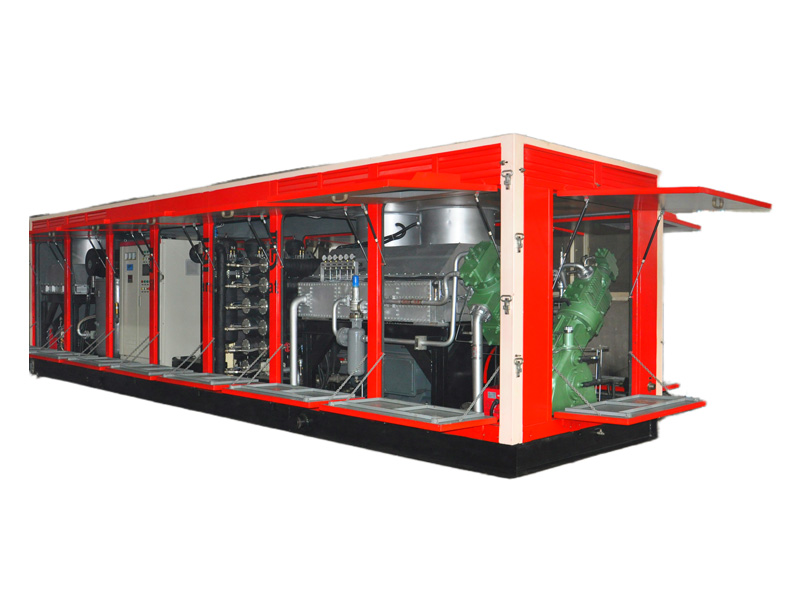
Your Guide to Critical Process Gas Compressors: Nitrogen, BOG, CNG, H2, CO2 & Beyond
Hey there. If you’re searching for a reciprocating compressor for a specific gas, you know it’s not simple. Standard air compressors won’t cut it. Process gases are different. Each gas has its own personality. Its own challenges.
You need the right machine for the job. A machine built for that specific molecule.
Let’s break down some of the most common – and most critical – process gas compressors. We’ll talk about what they do, where they’re used, and what really matters when you choose one.
1. The Nitrogen Compressor: The Inert Workhorse
Nitrogen is everywhere. Food packaging. Electronics manufacturing. Chemical inerting. Oil and gas purging.
It’s an inert gas. That’s the good news. It’s generally not reactive or corrosive. But “inert” doesn’t mean “easy.”
The challenge? Purity and dryness. For many processes, you need ultra-clean, dry nitrogen. Any oil or moisture contamination is a disaster. That means your nitrogen compressor often needs special configurations. Oil-free designs. Advanced sealing systems. The right materials to prevent contamination from the machine itself.
A robust reciprocating compressor is often the go-to choice for high-pressure nitrogen. It delivers the pressure you need while maintaining the purity you must have.
2. The BOG Compressor: Handling Cryogenic Volatility
BOG stands for Boil-Off Gas. Think LNG (Liquefied Natural Gas). It’s stored at incredibly low temperatures. But it constantly evaporates, creating BOG in the storage tank.
You can’t just vent this gas. It’s wasteful, expensive, and bad for the environment. Enter the BOG compressor.
This machine recaptures that evaporating natural gas. It compresses it so it can be re-liquefied or used as fuel. The big challenge here? Temperature. The compressor handles a gas that starts off extremely cold and can have wide temperature swings. It needs special materials and designs that won’t fail under thermal stress. Reliability is non-negotiable at an LNG terminal.
3. The CNG Compressor: Fueling the Movement
CNG is Compressed Natural Gas. It’s a vehicle fuel. At fueling stations, natural gas from the pipeline needs to be compressed to very high pressures (around 3,600 psi or more) to fill vehicle tanks quickly.
That’s the job of a CNG compressor. These are high-flow, high-pressure machines. They run for long cycles and need to be incredibly durable. Efficiency is huge here—energy costs directly impact operating profits. You also need stages of compression and cooling to get the gas to that high pressure safely and efficiently. Downtime means unhappy customers and lost revenue.
4. The H2 Compressor: Powering the Future
Hydrogen is the talk of the town. Clean fuel. Energy carrier. The future. But compressing it is a unique challenge.
Hydrogen molecules are tiny. They can leak through seals that would easily contain air or natural gas. It’s also highly flammable and can embrittle some metals.
An H2 compressor needs specialized engineering. Leak-free, non-lubricated sealing technology is critical. Materials must be compatible to prevent embrittlement. Whether it’s for refueling stations, refinery processes, or energy storage, safety and reliability are everything. This is not a place for standard equipment.
5. The CO2 Compressor: From Capture to Utilization
Carbon dioxide compression is central to CCS (Carbon Capture and Storage) and various industrial processes. Think beverage carbonation, enhanced oil recovery, or urea production.
CO2 behaves… oddly. When compressed, it can go through phase changes near its critical point. It can also be corrosive, especially if wet.
A CO2 compressor must be designed for these specific thermodynamic properties. It needs to handle potential condensation and use corrosion-resistant materials where needed. The sealing systems must contain the gas effectively throughout the pressure range. Precision engineering is key.
Why a Standard Reciprocating Compressor Isn’t Enough
See a pattern? Each gas is a specialist. Your compressor must be a specialist too.
A generic reciprocating compressor might have the basic piston-and-cylinder action. But that’s just the start. The real magic is in the details:
-
Materials: Special alloys, coatings, and piston ring materials.
-
Sealing: Advanced, gas-specific packing and seal designs to prevent leaks.
-
Configuration: Oil-free vs. lubricated, staging, and cooling systems tailored to the gas.
-
Safety: Engineering for the gas’s flammability, toxicity, and reactivity.
Choosing wrong means leaks, contamination, unsafe conditions, and massive downtime. You’re not just buying a machine. You’re buying uptime, safety, and product integrity.
Where to Find a True Process Gas Specialist
You need a partner who speaks the language of process gases. A company that doesn’t just sell a standard machine but engineers a solution for your specific molecule.
This is where deep expertise matters. You need a team that has designed compressors for nitrogen’s purity, BOG’s cold, CNG’s pressure, hydrogen’s escape artistry, and CO2’s phase changes.
Looking for a single source for these critical process gas compressors?
You should explore a provider known for this specialized engineering. A company that focuses on making the reciprocating compressor a precise tool for specific gases.
Find a dedicated process gas compression partner here: Process Gas Compressor Solutions.
This link takes you to experts who design and build for these exact challenges. It’s the right starting point for anyone serious about reliable, safe process gas compression.