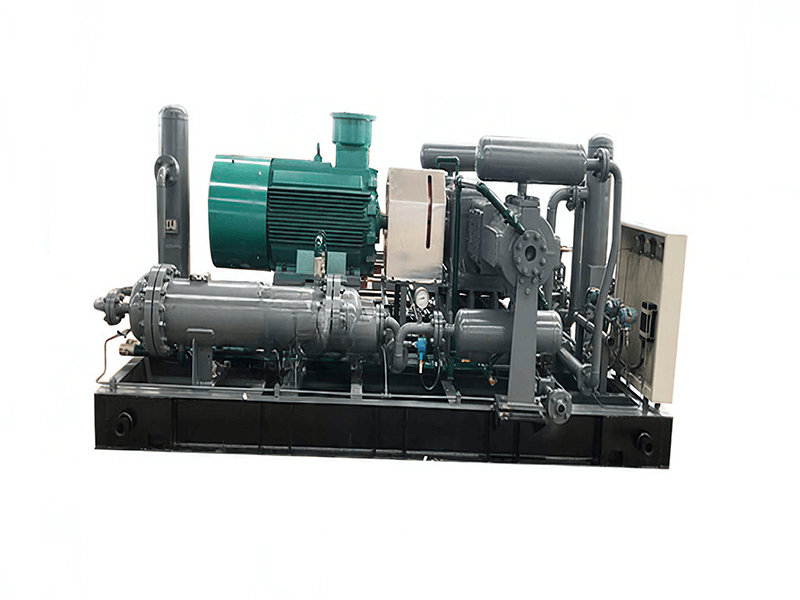
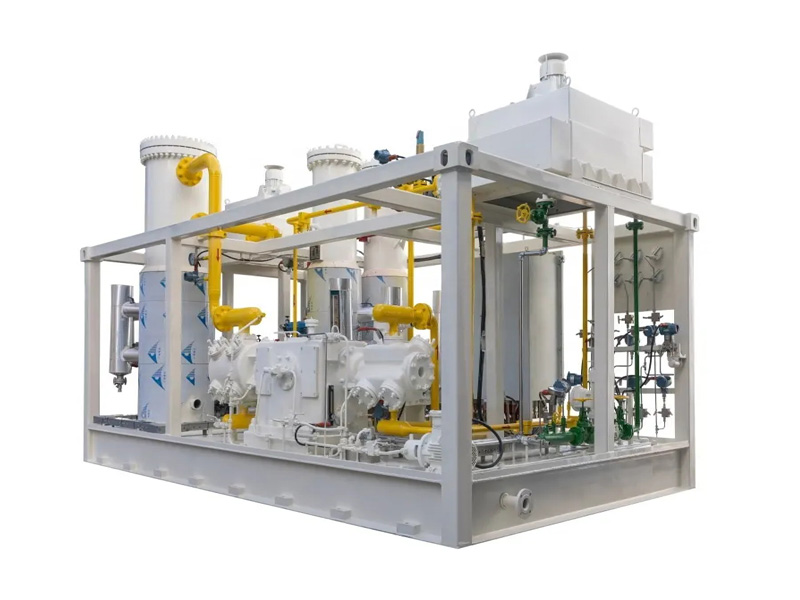
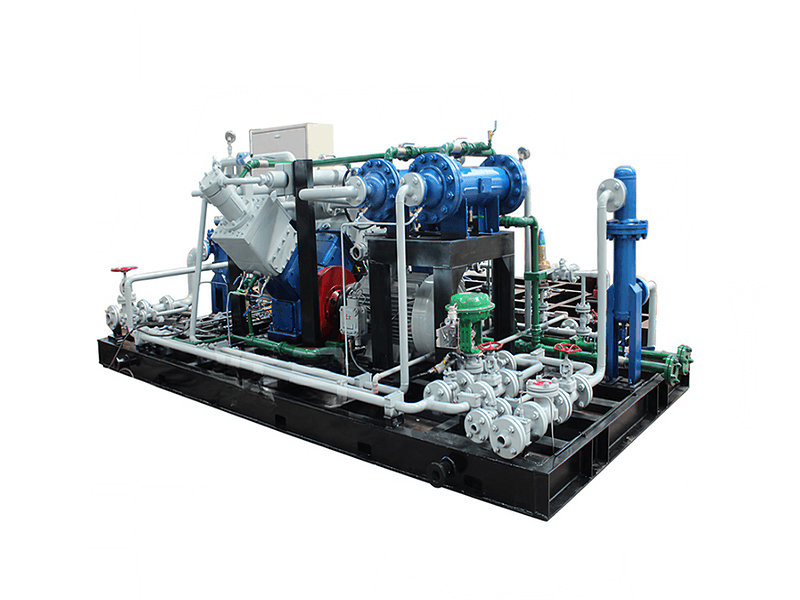
In everyday industrial production, there is a piece of equipment that, while little known to the general public, plays a critically important role in modern manufacturing – the nitrogen compressor. From chemical production to electronics manufacturing, from food preservation to pharmaceutical packaging, it quietly supplies the indispensable high‑pressure nitrogen resource to a wide range of industries. Today, let us get to know this behind‑the‑scenes workhorse of industry.
What is a nitrogen compressor?
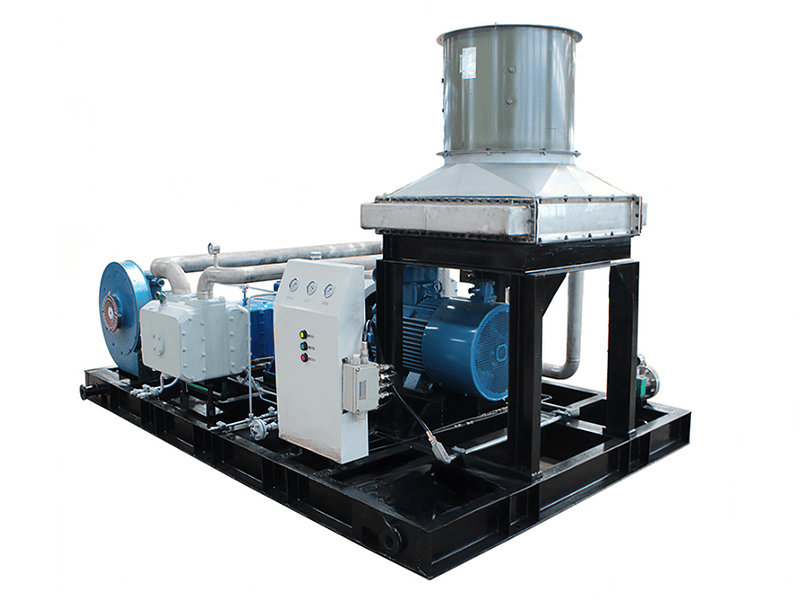
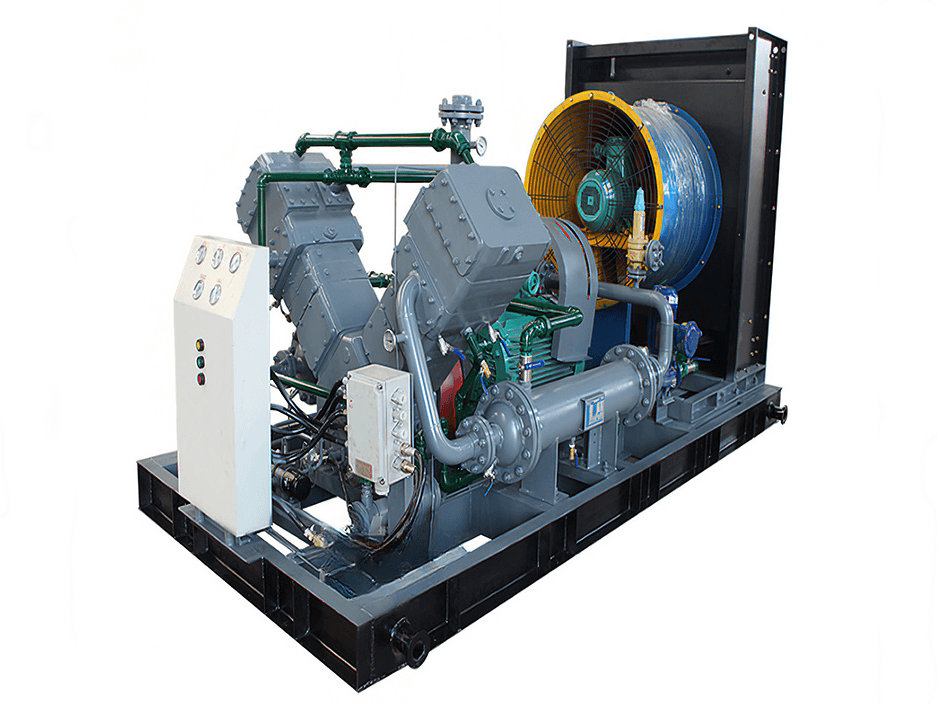
Simply put, a nitrogen compressor is a mechanical device specifically designed for compressing nitrogen gas. Its basic task is to take low‑pressure or even atmospheric‑pressure nitrogen produced by an air separation unit or stored in a tank, and raise it to a high‑pressure state through physical compression, so as to meet the various process requirements for high‑pressure nitrogen in industrial production.
The working pressure range of nitrogen compressors is remarkably broad – up to 90 MPa in the gaseous state, and as high as 300 MPa when the gas is liquefied. This allows them to adapt to a wide variety of applications, ranging from low‑pressure conveying and medium‑pressure purging to ultra‑high‑pressure forming.
How does it work?
The working principles of nitrogen compressors fall into two main categories: positive displacement and dynamic.
Positive‑displacement compression is the most widely used approach, and mainly includes reciprocating (piston) and screw types. Its core principle is intuitive – it raises the pressure by reducing the physical volume occupied by the nitrogen.It is like blocking the outlet of a syringe and forcefully pushing the plunger: when the gas is confined in a closed space and its volume decreases, the pressure increases accordingly. Reciprocating piston compressors rely on the back‑and‑forth motion of pistons inside cylinders to complete suction, compression and discharge, offering stable pressure and high efficiency. Screw compressors, on the other hand, use two intermeshing rotors rotating in opposite directions to accomplish compression, providing smooth operation and strong continuous gas delivery capability.
Dynamic compression, represented by centrifugal compressors, adopts a completely different approach – using high‑speed rotating impellers to convert mechanical energy into kinetic energy and pressure energy of the gas. Nitrogen enters the impeller at the centre and, as the impeller rotates at high speed, is thrown outward toward the periphery. During this process, the gas simultaneously gains velocity and pressure, and finally the velocity is further converted into pressure energy through a diffuser. This method is suitable for large‑flow, continuous gas supply applications.

What are the main types?
Nitrogen compressors can be classified in many ways, and understanding these classifications helps us better grasp the characteristics of different types.
By structural configuration, they are mainly divided into centrifugal compressors and reciprocating piston compressors. Centrifugal types are suitable for large‑flow continuous supply, while reciprocating types excel at delivering high‑pressure gas.
By shaft arrangement, there are single‑shaft multi‑stage and twin‑shaft four‑stage types. In the former, all impeller stages are mounted in series on a single shaft for a compact design; the latter uses two separate shafts for specific pressure combination requirements.
By cylinder configuration, they can be horizontally split or vertically split. The horizontal split design facilitates inspection and maintenance, while the vertical split type is more suitable for high‑pressure conditions.
By cooling method, there are external cooling and internal cooling types. The choice of cooling method directly affects the operating efficiency and stability of the equipment.
By lubrication method, they are divided into oil‑lubricated and oil‑free types. For industries with extremely high requirements for nitrogen purity, such as electronics and pharmaceuticals, oil‑free lubrication is often the preferred choice, as it avoids contamination of the gas by lubricating oil.
What are the core advantages?
Nitrogen compressors are widely used in the industrial field because of several outstanding advantages. They have a wide working pressure range, capable of meeting requirements from low to ultra‑high pressures; they offer flexible flow regulation to accommodate different production scales; and they support multiple control modes, from simple manual operation to fully automatic intelligent control. More importantly, owing to the good chemical stability of nitrogen, the compression process is safe and reliable, generating no electric arcs or sparks, making it particularly suitable for applications with stringent safety requirements, such as in the chemical industry. In addition, when in the holding pressure state, the equipment consumes almost no extra energy, demonstrating remarkable energy‑saving performance.
From this preliminary understanding of nitrogen compressors, we can see that this is not merely a simple pressurisation device, but a comprehensive technological achievement integrating mechanical design, fluid dynamics and thermodynamics. As modern industry continues to evolve, nitrogen compressors will undoubtedly play an even more irreplaceable role in more fields.