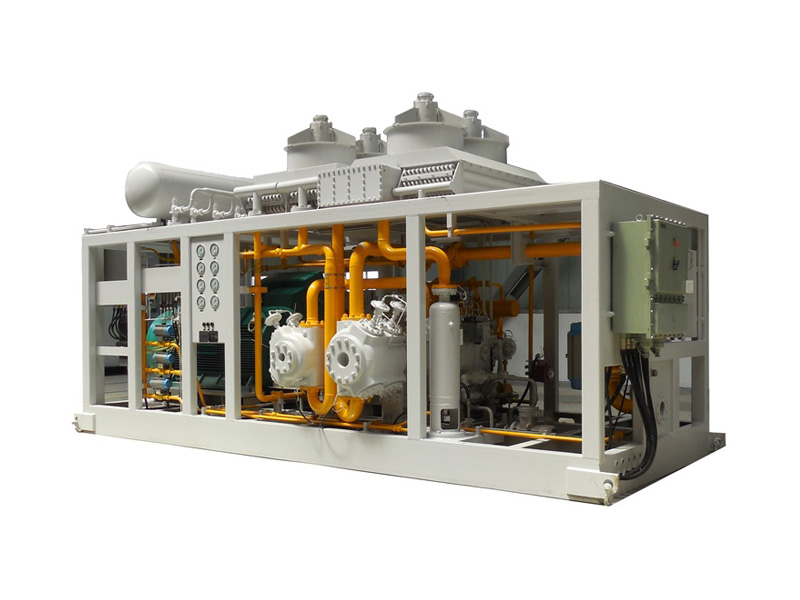
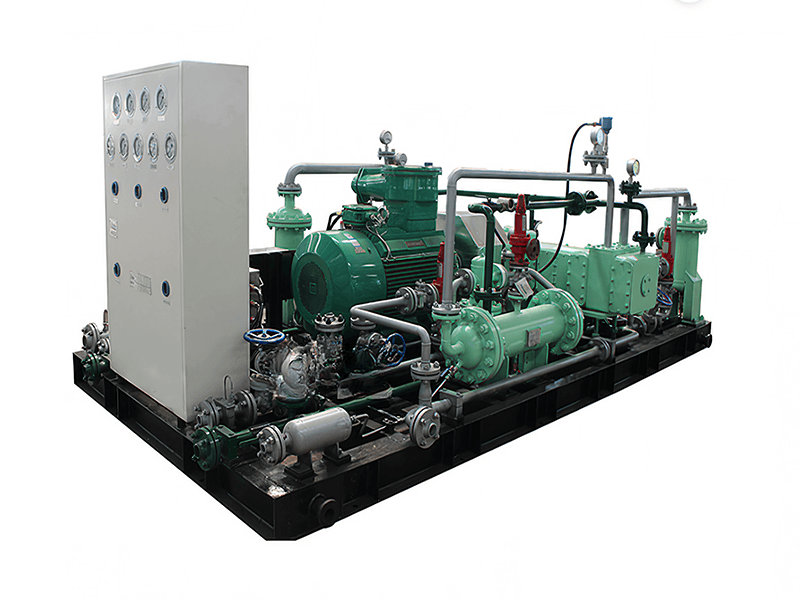
“Oil-free compressors are expensive” — this is a common misconception in the industry. However, when evaluated from a total cost of ownership (TCO) perspective, oil-free compressors demonstrate significant economic advantages.
In terms of explicit costs, the initial purchase price of oil-free compressors (especially diaphragm types) is indeed slightly higher than that of oil-lubricated models. But a comparison of energy consumption tells a different story: because oil-free compressors eliminate oil churning losses, their mechanical efficiency is typically 5% to 8% higher than oil-lubricated units. Over long-term operation, the resulting electricity savings are considerable.

The savings in implicit costs are even more striking. Oil-lubricated compressors require complex oil removal filtration systems, with consumables such as activated carbon filters needing frequent replacement. Moreover, the waste oil generated is classified as hazardous waste, incurring high disposal costs. Oil-free compressors eliminate the entire post-treatment chain, reducing both operating and maintenance expenses while avoiding environmental compliance risks. On the maintenance front, oil-free compressors do not require frequent oil changes or oil circuit cleaning, effectively reducing unplanned downtime. For high-purity hydrogen applications, the hydrogen produced by oil-free compressors can be fed directly into the stack without secondary purification, ensuring operational continuity at hydrogen refueling stations or industrial plants.
When selecting equipment for hydrogen applications, focusing on total cost of ownershiprather than purchase price is the key to genuine cost reduction and efficiency improvement.
Application Scenarios: Unlocking the Full Potential of Hydrogen
The application landscape of oil-free compressors extends far beyond hydrogen refueling stations. From green hydrogen production to industrial decarbonization, from electronics manufacturing to hydrogen-based metallurgy, this equipment plays a critical role across a diverse range of scenarios.
At the core scenario — hydrogen refueling stations — oil-free compressors handle multi-stage compression: from 20 MPa in storage tanks to 45 MPa in tube trailers, and further to 70 MPa or 35 MPa in onboard hydrogen storage cylinders — an interlinked three-stage boosting process. On the production side, oil-free compressors downstream of PEM/AEM electrolyzers boost atmospheric-pressure hydrogen to pipeline or storage pressures, ensuring that “green hydrogen” remains pure from its point of origin. Industrial applications are equally extensive: in hydrogen-based shaft furnace projects for the steel industry, large oil-free reciprocating compressors pressurize hydrogen to reaction pressures; in semiconductor manufacturing, where ultra-high-purity hydrogen is used as a carrier or reducing gas, oil-free operation is an absolute technical requirement.
The oil-free compressor is precisely the bridge connecting hydrogen production and hydrogen utilization — a critical enabler for achieving a scaled, closed-loop hydrogen economy.
Future Trends: Advancing Toward Higher Pressure and Greater Flow
With the growing adoption of Type IV and Type V cylinders, compressor discharge pressures are moving into the ultra-high range of 90 MPa to 140 MPa. Hydraulically driven piston boosters and diaphragm compressors are continuously pushing boundaries in this field, providing equipment support for next-generation hydrogen storage technologies.
Higher flow capacity and system integration represent another major trend. For large-scale green hydrogen projects with single-unit capacities exceeding 10 MW, modular combination designs (e.g., multiple compressor heads in parallel) achieve high-flow compression while minimizing footprint. A more advanced concept — the cryogenic compressor — involves cooling hydrogen to around -200°C before compression, dramatically reducing compression power consumption and achieving hydrogen densities approaching those of liquid hydrogen, representing a frontier direction for future exploration.
On the equipment manufacturing front, the localization of critical components for oil-free compressors — such as high-pressure diaphragm heads and high-speed rotors — is progressing steadily in China. Leveraging continuously improving cost-performance ratios, Chinese-made equipment is following Belt and Road hydrogen projects into overseas markets.
Technological evolution never ceases. Oil-free Hydrogen Compressors are advancing toward higher pressures, greater efficiency, and higher levels of integration — providing a solid industrial foundation for the construction of a hydrogen-based society.