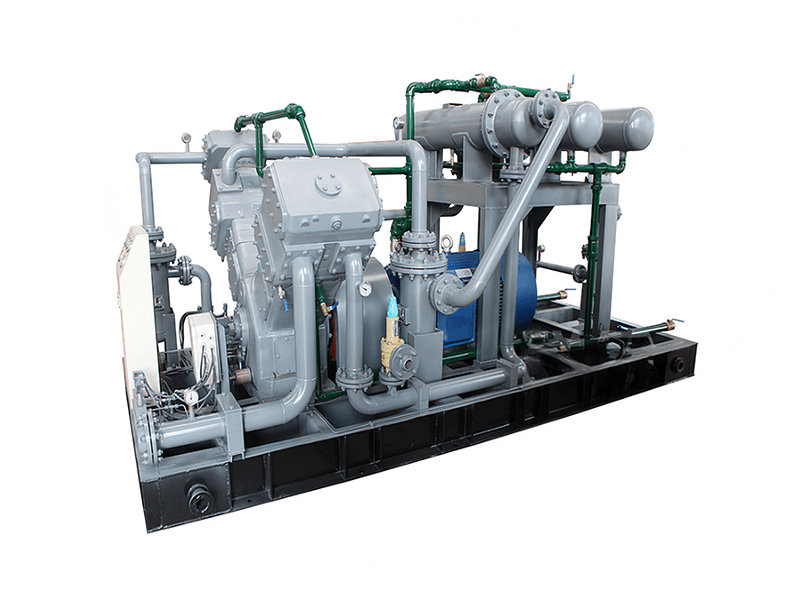
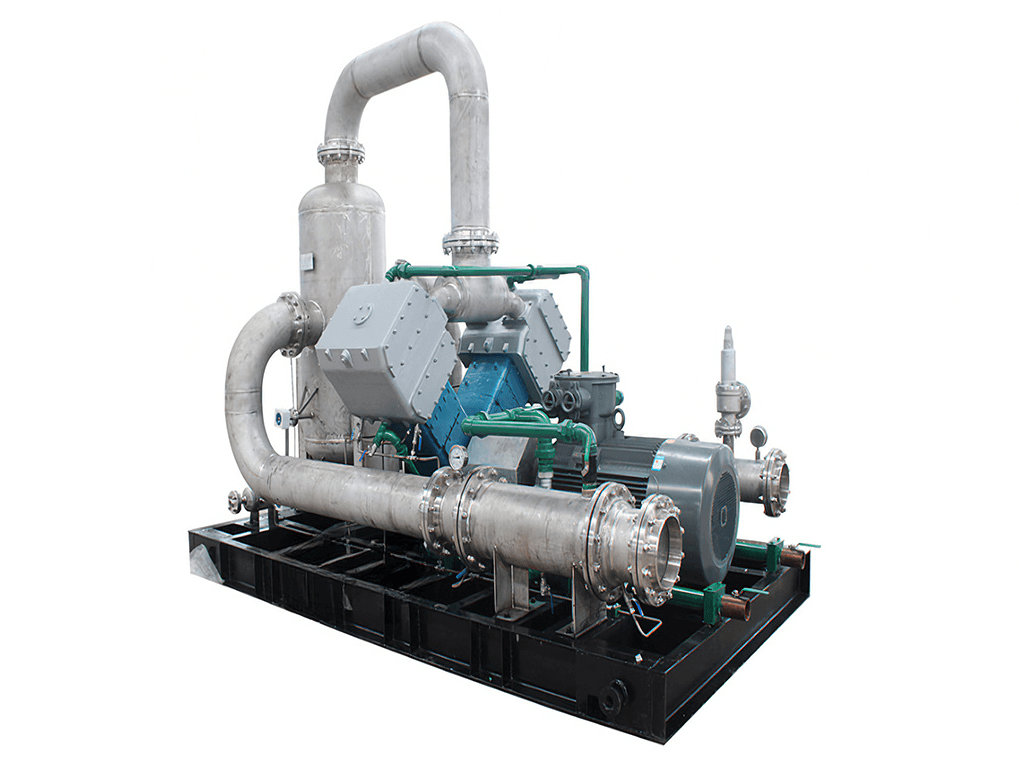
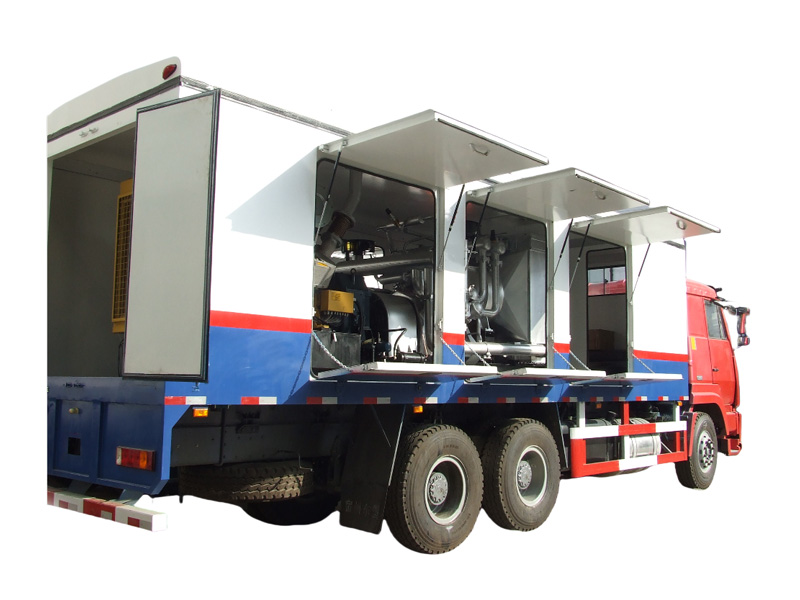
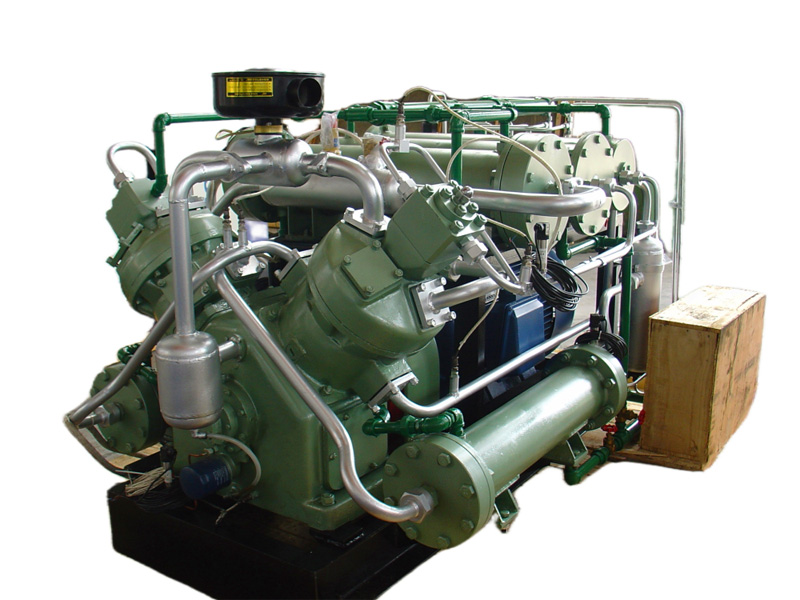
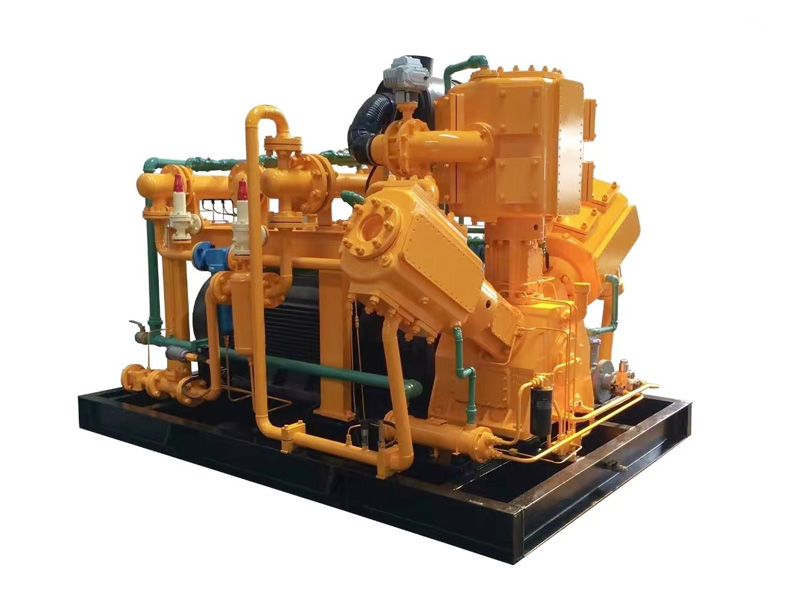
The hydrogen industry is accelerating into the fast lane of development at an unprecedented pace. Amidst this wave of energy transformation, oil-free Hydrogen Compressors, as critical equipment bridging hydrogen production and utilization, are providing indispensable pure power for hydrogen fuel cells, industrial decarbonization, and even the electronics industry, leveraging their unique technological advantages.
Technical Principles: The Path to Purity through Zero Contact
When traditional oil-lubricated compressors compress hydrogen, trace amounts of lubricating oil inevitably mix with the hydrogen. For hydrogen fuel cells, oil contamination is fatally detrimental—it can poison catalysts, clog proton exchange membranes, and directly cause performance degradation or even failure of the stack.
Oil-free compressors completely eliminate this contamination source through physical isolation and specialized structures. Currently, there are two main technological pathways: oil-free screw compressors utilize synchronous gears to drive male and female rotors for non-contact operation, employing coatings like Teflon or gas seal structures to ensure no oil enters the compression chamber. Diaphragm compressors, on the other hand, use hydraulic oil to actuate a metal diaphragm, which completely isolates the hydraulic oil from the hydrogen, achieving truly "zero-contamination" compression. Building on this, advanced sealing technologies such as labyrinth seals and dry gas seals further fortify the defense against hydrogen leakage.

Under the standards for hydrogen used in fuel cell vehicles, oil-free design has become the fundamental prerequisite for ensuring hydrogen purity reaches 99.99% or even 99.999%.
Materials and Processes: Advanced Technologies for Coexisting with Hydrogen Embrittlement
Hydrogen, being the smallest molecule in the periodic table, posing severe challenges to compression equipment. Hydrogen atoms can easily permeate metal lattices, causing "hydrogen embrittlement"—a phenomenon where metallic materials experience reduced ductility and crack propagation, which in severe cases can lead to rotor fracture or casing rupture in compressors.
Addressing this challenge requires systematic solutions from materials science. Under high-pressure conditions, hydrogen embrittlement-resistant metals like high-nickel alloys and austenitic stainless steels (e.g., 316L) are preferred, complemented by specialized forging processes to eliminate internal stress concentration points. Concurrently, polymer materials such as carbon fiber-reinforced composites and PEEK (polyetheretherketone) are widely used for piston rings and seals. These materials not only possess self-lubricating properties but also do not generate metallic debris. To achieve extremely low internal leakage under oil-free conditions, the processing precision of core components must reach the micron level—representing the pinnacle of high-end manufacturing.
An outstanding oil-free hydrogen compressor is fundamentally a deep collaboration between materials science and precision manufacturing.
Safety and Intelligence: The Gatekeeper of the Hydrogen Era
Hydrogen is characterized by its flammability and explosiveness, with a lower explosive limit of 4% by volume. Given this high-risk medium, oil-free compressors embed intrinsic safety principles from the design stage itself.
The complete unit strictly adheres to explosion protection standards such as Ex de ib mb ⅡC T4 Gb, with all electrical components designed with flameproof enclosures. A network of strategically placed hydrogen concentration sensors forms a comprehensive monitoring system. When the leak concentration reaches one-quarter or even one-tenth of the lower explosive limit, the system immediately triggers a shutdown and initiates forced ventilation, nipping potential risks in the bud.
The introduction of intelligent operation and maintenance systems further enhances equipment safety and reliability. As oil-free compressors lack the damping effect caused by oil churning, the operating status of bearings and gears becomes the focal point of monitoring. By installing wireless sensors and combining real-time analysis of vibration and temperature data with AI algorithms, the system can accurately predict remaining bearing life, effectively avoiding sudden "seizure" or "bearing burn-out" incidents. As an OEM, leveraging cloud platforms to provide customers with 7×24-hour remote operation and maintenance support significantly reduces the frequency and risks associated with on-site inspections.
Intelligence is not only a tool for cost reduction and efficiency improvement but also a core defense line against the high-pressure risks associated with hydrogen.